Recipes
Pasta
- Whole Wheat Spaghetti in Anchovy Sauce (Parve)
- Tagliolini in Lemon Sauce (Dairy)
- Traditional Pasta Sauce (Meat)
- Cheese and Pepper Pasta (Dairy)
- Spaghetti or Linguine in Tuna sauce (Parve)
- Bucatini Pasta in Fontina Sauce with Hazelnuts and Thyme (Dairy)
- Pasta with Swiss Chard and Goat Cheese Sauce (Dairy)
- Pasta with Artichoke and Walnut Sauce (Dairy)
- Pesto and other No-Cook Pasta Sauces (Parve or Dairy)
- Penne with Olives and Walnuts (Parve or Dairy)
- Pasta Salad with Tuna (Parve)
Bigoli are a kind of thick, hand-made whole-wheat spaghetti typical of Venice, my hometown. This delicious white sauce with onions and anchovies has Jewish roots, but has become popular across the religious spectrum. This recipe can also be made using regular whole-wheat spaghetti.
Ingredients
(serves 6):
. 1 pound package whole-wheat spaghetti (I like De Cecco or Barilla)
- 5-6 tablespoons extra-virgin olive oil
- 2 large white onions, minced thin
- a 3-ounce can of oil-packed anchovy fillets (even better, 10 salt-packed anchovies, rinsed), minced
- half a cup of dry white wine, like a Pinot Grigio or Riesling
- salt, pepper
- toasted bread crumbs, if desired.
Instructions
In a large pot of salted boiling water, cook the pasta ‘al dente’ following the instructions in my previous post.
Meanwhile, in a saute’ pan, heat the olive oil over a medium flame. Add the minced onions and a couple of tablespoons of water and lower the flame.
Let the onions cook, stirring, till translucent, adding little water if they start to dry out.
In the meantime, you will have minced the anchovies; once the onions are translucent add the anchovies and wineto the onions and keep cooking on low heat, stirring, until they ‘melt’ completely into the sauce.
Add black pepper to taste, and use this sauce to dress your spaghetti. Some like to add grated Parmigiano Reggiano cheese (in a dairy meal), or toasted bread-crumbs and parsley; but the classic Venetian way to eat this pasta is without any additions.
Italian Jews have always been very fond of lemons, and incorporate their juice and zest into many recipes: just like those with vinegar, these dishes are described as “all’agro” (sour style).
In the Middle Ages and Renaissance, they were apparently heavy lemonade drinkers - in most regions it was sweetened with honey or sugar, but in Rome it was seasoned with salt.*
serves 4 to 6
- 1 pound tagliolini, fettuccine, linguine or spaghetti
- extra-virgin olive oil (1/2 cup to 2/3 cups) OR melted butter
- grated Parmigiano (1/2 cup to 2/3 cups)
- 2 large organic, untreated lemons
- grated zest of one of these lemons, avoiding the white part
- Salt to taste
- White pepper
- 2-3 tablespoons of freshly chopped mint leaves
Cook the pasta in a large pot of boiling salted water, stirring every couple of minutes, until “al dente”.
In the meantime, mix together the olive oil (or butter),lemon juice, lemon zest and cheese in a large bowl, previously warmed.
Drain the pasta, but save 3/4 cup of its cooking water. Toss the pasta with the sauce and the reserved cooking water. Add the water a little at a time, only as needed 1/4 cup at a time as needed. Add salt and pepper, and the chopped mint leaves or chives.
*For more on this topic, A. Toaff, Mangiare alla Giudia, Bologna 2000, Societa’ Editrice Il Mulino, p.109 (also available in Hebrew)
A quick and traditional pasta sauce used for Shabbat in many communities in Northern Italy is the juice
left over from roasting lean cuts of meat.
Use high-quality Italian olive oil, a couple of garlic cloves (whole), rosemary, salt and pepper.
Serve some of this sauce with the roast meat, but use what’s left to dress egg noodles (tagliolini or fettuccine).
A cold version of this pasta is the Agresto, or Bagna Brusca, in which lemon juice and egg are added to the meat juices after the pasta has been allowed to cool off. In this case, serve at room temperature.
Pasta Cacio e Pepe (Cheese and Pepper) is the perfect example of a minimal dish that packs maximum flavor. The only tricks are using really good ingredients (the cheese and the butter), and cooking the pasta perfectly al dente. Pair it with an arugola salad and you won’t miss your Mac ‘n Cheese! Ingredients (serves 4 to 6)
- a package of Italian pasta (tagliolini, linguine, bucatini, or thick spaghetti)
li style=”">coarse salt
- 4 tablespoons butter
- 3/4 tablespoon freshly grated black pepper (or to taste)
- 2/3 cup freshly grated Italian Parmigiano Reggiano
- 1/3 cup freshly grated Pecorino Romano
Instructions
Cook the pasta in salted boiling water until al dente. Drain, reserving 1 cup of the cooking water.
Melt half the butter in a large skillet over medium heat. Add the pepper and cook for one minute.
Add half of the reserved pasta water to the skillet, bring to a simmer and add the pasta and the rest of the butter.
Remove the skillet from the heat; add both the Parmigiano and the Pecorino cheeses, tossing well and adding more pasta water if the pasta is too dry.
Ingredients (serves 4):
3/4 pound spaghetti or linguine
2 garlic cloves, pressed (or minced for a very intense favor)
4 tablespoons extra-virgin olive oil
3 anchovy fillets, oil or salt-packed, rinsed and drained
the juice of 1/2 a lemon
1 tablespoon freshly chopped parsley
1 tablespoon capers, drained and chopped (optional)
salt and black pepper to taste
1 can of yellowfin tuna, packed in olive oil and well drained.
Directions
Heat the olive oil in a pan, add the garlic and allow it to cook with the anchovy fillets, stirring, until the anchovies dissolve in the oil (you can add a touch of chili powder if you like spicy dishes). Add the tuna (well drained and broken into small pieces with a fork), and allow to cook for 2 more minutes, adding a few tablespoons of the pasta cooking water if needed. Add the capers, the lemon juice and parsley. Taste and add salt if needed, plus some pepper.
Add the pasta (cooked al dente and well drained) to the pan with a little of the pasta cooking water, and toss it for a minute or two with the tuna sauce. Enjoy!
*** Some people prefer their tuna sauce with tomato: for this version, instead of adding lemon juice add a can of strained or chopped Italian tomatoes, and allow to cook for a few minutes or until it thickens.
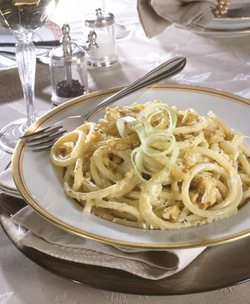
Bucatini Pasta in Fontina Sauce with Hazelnuts and Thyme (Dairy)
Ingredients (serves 4)
- 3/4 pounds bucatini* pasta
- 8 ounces of a sharp, creamy cheese that melts well (Italian Fontina/Fontal, or Brie or Camembert)
- 4 small leeks
- 2 tablespoons butter or extra-virgin olive oil
- 1/4 cup heavy cream
- 1/4 cup milk (or less)
- 1/2 cup coarsely ground hazelnuts
- f1 1/2 tablespoons freshly minced thyme
- salt and pepper to taste
*(Bucatini are very thick spaghetti with a hole in the middle. Most major Italian brands make them, but if you can’t find them you can substitute linguine)
Clean the leeks, discarding the green and harder parts, and slice them thinly. Heat the oil or butter in a skillet, add the leeks and cook until soft. In the meantime, toast the hazelnuts in the oven for a few minutes, and grind them coarsely.
Place the cheese in a heavy or non-stick skillet with the milk and cream, and allow it to melt, stirring frequently. Remove the skillet from the heat, and combine the cream/cheese mix with the cooked leeks and the ground hazelnuts.
Cook the pasta ‘al dente’ (for instructions, check my article here) and drain it, setting aside a few tablespoons of the cooking water. Toss the pasta with the cheese sauce and a little cooking water; sprinkle with pepper, decorate with thyme and serve hot.
** If you are watching your diet, you can play with the proportions of milk and cream (or just skip to one of my vegetable-based pasta sauces
This is one of my favorite recipes when I really need to force some vegetables into my kids!
Ingredients (serves 4)
- 3/4 pound spiral-shaped pasta, such as eliche, fusilli or gemelli
- 6 spoonfuls milk
- 5 ounces goat cheese (a small log)
- 1/4 pounds swiss chards, boiled, drained, squeezed, and chopped
- 1 or 2 cloves garlic, peeled and slightly pressed
- 2 tablespoons extra-virgin olive oil
- freshly grated Italian Parmigiano cheese (or Argentinian Reggianito)
- salt and pepper
Directions
Cook the pasta in abundant salted boiling water. In the meantime, heat the oil in a skillet and add the slightly pressed garlic. Cook for a couple of minutes, discarding the garlic before it starts smoking. Add the swiss chards (boiled, drained, squeezed, and chopped), stir well, salt and cook for a few minutes. Remove from the heat and combine well with the goat cheese, milk. and about 1/2 a ladleful of the pasta cooking water. When the pasta is “al dente”, drain it and dress it with the swiss chard sauce; add some grated parmigiano, et voila!
- 1 package (1 pound) Italian pasta, Reginette or Pappardelle or Tagliatelle type
- 8 artichokes (or a bag of frozen artichoke hearts)
- 1/2 cup shelled and toasted walnuts
- 4 tbsp cream (optional)
- 2 cloves garlic
- 5 tbsp extra-virgin olive oil
- salt and pepper to taste
- freshly grated parmigiano cheese to taste
Directions
If using fresh artichokes, clean, eliminate choke, and slice thinly. If using frozen hearts, cook for 5 minutes in the microwave with 5 tablespoons of water, drain.
Heat the olive oil in a skillet, add the garlic and the artichokes, salt and pepper. Add 1/2 cup white wine and cook until soft, stirring occasionally. Add pepper and the cream (if using), and process in a food processor with the walnuts. Boil abundant water in a large pot; add some coarse salt and cook the pasta in it until “al dente” (for a brighter color, you can add 1/2 teaspoon saffron stems to the cooking water). Drain the pasta, reserving a ladleful of the cooking water. Dress with the artichoke sauce, a few spoonfuls of the cooking water, and freshly grated parmigiano cheese.
That’s why uncooked pasta sauces are very popular with Italians in the summer.
An added benefit is that if you use a food processor - instead of the traditional mortar and pestle- all these sauces can be ready in a pinch! Most of them are parve, and they can also be served with steamed or grilled fish and poultry, adding intense flavor while allowing you to control the amount of fat you are using.
You should only use high quality, cold-pressed extra-virgin olive oil.
Purists say that uncooked pestos should only be made with a marble mortar and pestle, because any heat produced by the food processor spoils the flavor of the fresh ingredients. My mom, who is practical, taught me that the next best thing is storing your food processor bowl and blades in the freezer for at least an hour before using.
Always remember to “thin out” these uncooked sauces with some of the pasta cooking water, before using them to dress your pasta.
The correct proportions are 50% sauce and 50% cooking water.
Here are a few recipes, but with this kind of uncooked sauces you can experiment a bit with what’s in your pantry, starting with a base of garlic and olive oil - try olives, peppers, capers, tuna, anchovies, fresh or sun-dried tomatoes… just avoid using too many ingredients at the same time: in Italy, simplicity is a must!
TRADITIONAL BASIL PESTO (Dairy)
- scarce 1/3 cup toasted pine nuts
- 2 full cups fresh basil leaves
- 2 large garlic cloves, peeled
- a pinch of salt
- 5 tablespoons freshly grated Parmigiano-Reggiano cheese
- 3 tablespoons freshly grated pecorino romano cheese
- 1/2 cup cold-pressed extra-virgin olive oil (choose a more delicate type such as a Ligurian or French oil if possible)
Instructions
Wash the basil and pat it dry with paper towels, discarding any stems. Place in a mortar or cold food processor with the pine nuts, garlic and salt. Grind into a paste and add the grated cheeses and the oil. If using a food processor pulse at low speed to prevent the machine from heating up. The texture should remain slightly grainy.
If you are not using right away, pour into jar, cover the surface with a layer of olive oil and seal tightly (you can store it in the fridge for 4 to 7 days, or for several months in the freezer).
*Remember to dilute your pesto with some of the pasta cooking water before dressing pasta with it!
For perfect “al Dente” pasta, follow my step-by-step instructions here:
http://www.dinnerinvenice.com/pasta.html#1
WALNUT PESTO (Dairy)
Ingredients (serves 4-6) (for 1 pound of pasta)
- 1 cup shelled walnuts
- 2 large garlic cloves, peeled
- a pinch of salt and pepper to taste
- 1 slice of bread
- 1/2 cup whole milk
- 1/2 cup Parmigiano-Reggiano cheese, freshly grated
- 1/2 cup cold-pressed extra-virgin olive oil
- a few majoram leaves, if available
Instructions
Soak the slice of bread in the milk till it breaks down. In a marble mortar or a cold food processor (chill the bowl and blades in the freezer) grind the walnuts with the garlic, majoran, salt and pepper.
If using a food processor pulse at low speed to prevent the machine from heating up.
Add the bread/milk mixture, the cheese and the oil, and a little water if the paste is too thick.The texture should remain slightly grainy.
If you are not using right away, pour into a jar, cover the surface with a layer of olive oil and seal tightly (you can store it in the fridge for 4 to 7 days, or for several months in the freezer).
**** Always remember to dilute your pesto with some of the pasta cooking water before dressing pasta with it!
For perfect “al Dente” pasta, follow my step-by-step instructions here:
http://www.dinnerinvenice.com/pasta.html#1
- 1/2 cup pine nuts
- 1/2 cup grated Parmigiano-Reggiano cheese
- 1/2 cup cold-pressed extra virgin olive oil
- 2 large garlic cloves, peeled
- a large pinch of salt
- (optional) 4 oil-packed anchovies (***in the Italian and in most Sephardic Kosher traditions, mixing fish and dairy in the same dish is forbidden. But if you are Ashkenazi or if you do not follow Jewish Dietary laws, go ahead and add the anchovies: they taste great with arugola!)
Instructions
Toast the nuts in a skillet over medium heat for a few minutes.
Combine the arugula, salt, walnuts, garlic (and anchovies, if using) in a food processor. Grind and add the cheese. Pulse while slowly pouring the oil into the mixture. Pulse at low speed to prevent the machine from heating up. The texture should remain slightly grainy.
If you are not using right away, pour into a jar, cover the surface with a layer of olive oil and seal tightly (you can store it in the fridge for about 4 days).
**** Always remember to dilute your pesto with some of the pasta cooking water before dressing pasta with it!
For perfect “al Dente” pasta, follow my step-by-step instructions here:
http://www.dinnerinvenice.com/pasta.html#1
Ingredients (serves 4 to 6)
- 1 pound Penne (1 package)
- 1/2 cups fresh chopped Italian parsley
- 1/2 cup toasted walnuts
- ½ cup diced tomatoes, drained and seeded
- 1/4 cup coarsely chopped pitted green or black olives
- Salt and pepper to taste
- 1/3 cup extra-virgin olive oil (I used an oil from Apulia)
- (optional) Pecorino or Parmigiano cheese, if making a dairy meal
Instructions
Bring a large pot of heavily salted water to a boil over high heat. Place parsley, walnuts, tomatoes, olives, pepper and a large pinch of salt in a food processor. Pulse until all the ingredients are coarsely chopped. With the machine running, add the oil in a slow stream. The texture should be grainy, not too smooth.
Cook the penne till “al dente”. Reserve 1/4-cup of the pasta water before draining in a colander; return pasta to the empty pot.
Add the sauce, and toss. Stir in the reserved pasta water; add parmigiano or pecorino cheese if liked; serve immediately.
Ingredients (Serves 4 as an appetizer)
3/4 pounds pasta (sedanini, rigatoni, or penne)
2 medium tomatoes
1 can olive-oil packed yellowfin tuna
a bunch of fresh Italian parsley, basil and majorane, finely chopped
1 tablespoon capers
1/3 cup stuffed green olives
1/3 cup pitted black olives
5 tablespoons extra-virgin olive oil
a touch of chili powder
salt and pepper to taste
Instructions
Blanche the tomatoes for 30 seconds in a pot of boiling water. Peel them, seed them and dice them. Place them in a large bowl and add the fresh herbs, the olive oil, salt, pepper and chili. Stir and allow to rest covered for at least 1 hour.
In a large pot of salted boiling water cook the pasta till “al dente”; drain it and allow it to cool. Place it in the bowl with the tomato and oil mix, and add the sliced olives, the drained tuna, and the capers. Stir well and serve.


