Desserts

Surprise Holiday Chest

Image

From Chanukkah to Christmas and of course birthdays, most of you will have to admit that part of the fun about giving and receiving presents lies in the packaging and wrap, which add an element of mystery and surprise to any gift. They conceal the object’s shape and any writings on the box, and increase our excitement and anticipation. For the aesthetes among us, the packaging can outshine the gift (or it can be used to hide a more metaphysical content – for more on this, you can read one of my favorite children’s books, “The Gift of Nothing”).
Image

This rule of course applies to food, which is why chocolates seem to taste so much better when they come in a gorgeous box. The Japanese take this to the next level, cutting their vegetables into beautiful shapes and serving their kids’ school meals in lacquered bento boxes. This probably sounds like too much work and most of us would not be willing to do it everyday, but when it comes to holiday desserts, I know that we are all willing to go the extra mile.

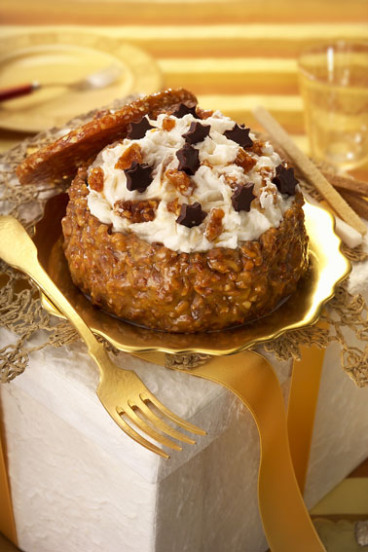
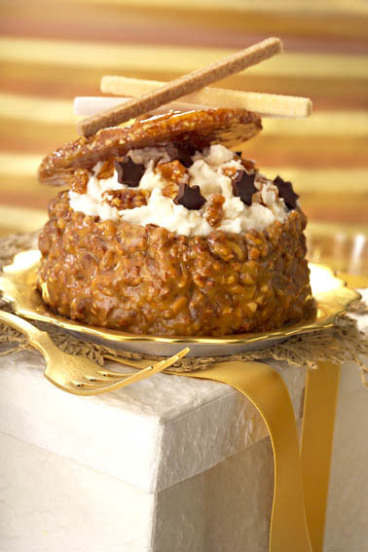
So here is a special edible gift that your family will love! The mascarpone mousse, which will remind you of Tiramisu, is hidden in a treasure chest made of “Croccante” (Italian almond brittle). This type of candy, popular throughout Italy around the holidays and at fun fairs, is a mixture of caramelized sugar and almonds, easy to make, and easy to eat: you can break it into pieces and serve it with coffee, give it to kids in lieu of candy, or grind it up and sprinkle it over gelato. The only problem is that once you taste it, it will be hard to stop.

Happy Holidays!

SURPRISE HOLIDAY CHEST (Scrigno di Croccante)

(For the chest)

  • 2 and 1/3 cups blanched almonds
  • 1 lemon
  • 1 ½ cup sugar

(for the filling)

  • 2/3 pounds Mascarpone
  • 1 cup heavy cream
  • 4 oz bittersweet chocolate, chopped or coarsely grated.
  • ½ cup sugar

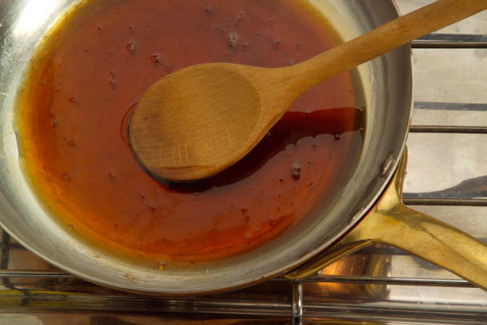
Grind the almonds very coarsely in your food processor, or chop them with a knife. In a saucepan, melt the sugar on medium heat with the filtered juice of half the lemon. Yum, caramel!
Image

Add the almonds and keep cooking until the sugar has completely melted and has turned dark golden brown. Double-Yuml!!!

Cut a circle from parchment, about 9 ½” in diameter. Place it on top of a larger sheet of paper or foil. Now pour the caramel on top of the circle and spread it all over, it should be between 1/3” and ½” thick.

Carefully lift the circle and trasfer it onto a round 8 “ baking pan, lifting the sides and pressing them against the sides of the pan with a tablespoon dipped in lemon juice, until the caramel has molded to the shape of the pan. On a smaller disc of parchment, make a second disc of caramel (slightly less than 8″ in diameter), which will become the “lid’.

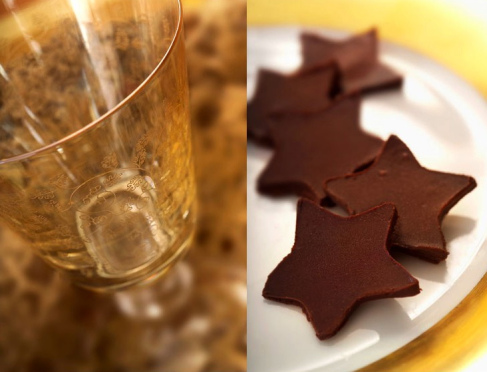
Whip the cream with an electric whisk, and combine it with the sugar, mascarpone, and amost ¾ of the chocolate. Pour into the caramel container, and top with the lid. Decorate with the rest of the chocolate, melted in a bain-marie, poured on top of parchment and cut into stars – or simply grated. Refrigerate until you are ready to serve.
ImageS

Categories: Comfort food, dairy, Desserts, Uncategorized | Tags: , , , , , , , , , , , , , | 4 Comments

Venetian Pumpkin Fritters

Pumpkin arrived in Italy after the discovery of the Americas, and Northern Italian Jews liked it so much that in Venice we called our favorite type “suca baruca” (holy pumpkin, from the Hebrew “baruch”).
When it made its first appearance, Venice in general -and Jewish Venice in particular – was a crossroad of peoples and cultures, in which countless examples of what we would now call “Fusion” cuisine came to life. These fritters, which include spices and candied fruit, are a perfect example!

This recipe was published in the Dining Section of the New York Times, Dec 21, 2011.

Ingredients

  • 1 pound pumpkin or butternut squash, cleaned and diced small
  • 2 eggs
  • grated zest of 2 oranges
  • ¾ cup of sugar and a pinch of salt
  • 1 and ½ cups flour
  • ½ package (8 gr) baking powder
  • ½ teaspoon cinnamon, if liked
  • 1/3 cup Raisins or Sultanas
  • 1/3 cup pine nuts
  • 1/3 cup candied etrog or lemon (if you don’t like it, skip & increase raisins & pine nuts)
  • Olive oil or peanut oil for deep-frying, at least 3 cups or more
  • Confectioner’s sugar for decorating

Directions

Plump the raisins in a cup of warm water. Chop the candied zest.

Place the diced squash in a large platter and cover almost completely, leaving a small opening for the steam to come out, and microwave on high for 10 minutes or until very tender.
Beat the eggs in a food processor with the sugar, salt, cinnamon, orange zest; add the cooked squash and process until smooth.
Drain and dry the raisins, and add them to the mix.
Transfer to a large bowl and gradually add the flour, sifted with the baking powder, using an electric or manual whisk.
In a frying pan, heat the oil to frying temperature (you can test it by dropping a small piece of bread in the oil: if bubbles form around the bread, the temperature is right). Take the batter with a tablespoon, filling it to about ½, and push the batter into the oil with your index finger or a second spoon. The batter should be quite wet and liquid and you won’t be able to shape it: this is normal! You will let it drop into the hot oil and it will puff up quickly, forming the fritters. You will also end up with drops, that would turn into crumbs. Don’t worry about these: you can just discard them every time you take out a ready batch of fritters… or you’ll end up eating them all, like I always do Fry in small batches until golden all over, turning to cook evenly. Remove with a slotted spoon and transfer onto a platter lined with several layers of paper towels.

Sprinkle with powdered sugar right before serving (serve warm).

Ed

Categories: Cucina Ebraica, dairy-free, Desserts, Hanukkah, Jewish Italian Cuisine | Tags: , , , , , , , , , , , , , , , , | 3 Comments

Panna Cotta alla Melagrana - Pomegranate Cream Custard

Image

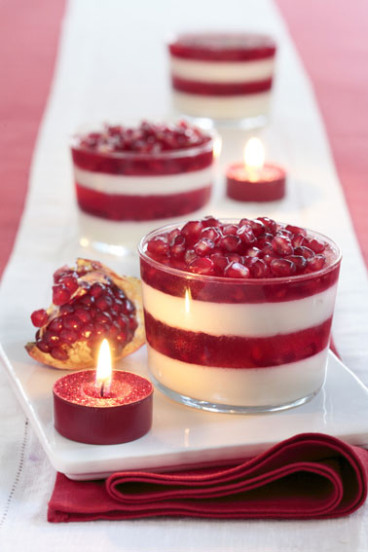
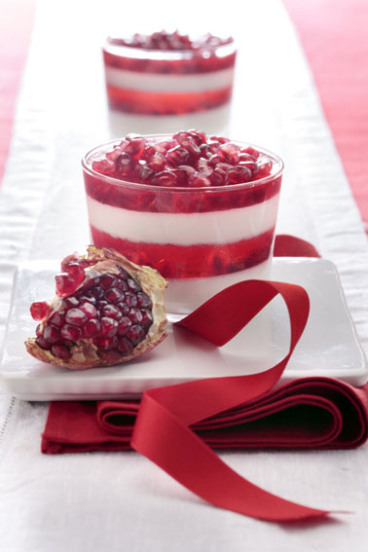
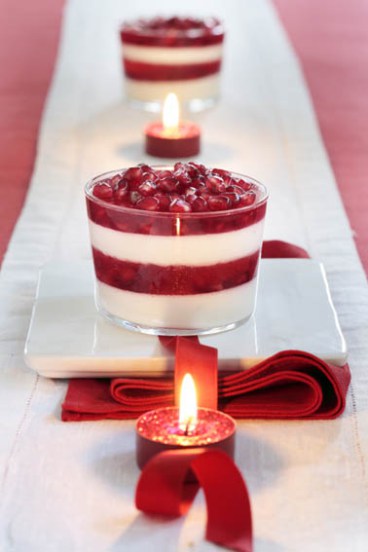
Panna cotta (cooked cream in Italian) is a traditional dessert from Northern Italy, prepared by simmering milk, sugar and cream and mixing them with gelatin. It literally takes minutes to make, but never fails to “wow” the guests. For a holiday version, I spiced it up with ponegranate seeds – a symbol of prosperity and good luck in many different traditions, not to mention a perfect contrast of color and flavor with the cream. Serve it for Hanukkah, Christmas, New Year, or a romantic anniversary dinner!

Image

  • 1 cup heavy cream
  • 2/3 cup whole milk,
  • 3/4 cup powdered sugar
  • 1 vanilla bean, cut into 2
  • 1 package powdered gelatin
  • 2 cups pomegranate juice
  • 1/3 cup pomegranate seeds

Soften about 2/3 of the gelatin in a few spoonfuls the cold milk. Heat the rest of the milk with the sugar and the cut vanilla bean. Once it’s hot, stir in the gelatin mixture and mix until smooth. Allow to cool, discard the vanilla bean, and stir in the heavy cream. Pour about 3/4″ of this mixture into 4 glass cups and transfer into the freezer for a few minutes until the mixture thickens.

Soften the remaining gelatin in about 2 or 3 tbsp of the pomegranate juice. Heat the rest of the pomegranate juice, stir in the softened gelatin, mix well and allow to cool. Once the first layer of cream mixture has thickened, pour in a layer of pomegranate mixture, mixed with a few pomegranate seeds, and put the cups back into the freezer. Repeat with one more layer of cream and one of gelatin and pomegranate seeds. Top with a few more pomegranate seeds right before serving.

Image

Categories: Comfort food, dairy, Desserts, gluten-free, Uncategorized | Tags: , , , , , , , , , , , , , | 12 Comments

Espresso-spiked Chocolate Ricotta Mousse

Image

One of the immediate consequences of receiving a Syntia machine as a thank-you token after my lecture for Lavazza Coffee and Philips Saeco at Eataly last September, was that I started putting espresso into everything.

Literally: I experimented with stews, fish, fennel, fresh pasta, smoked cheese… with a couple of exceptions, everything seemed to taste more interesting. It’s probably because our sense of smell is responsible for about 4/5 of what we taste – that’s why we lose our appetite when we have a cold and our nose is blocked! With its intense and unique aroma, high-quality coffee is an extraordinary ingredient and can add sophistication to a variety of dishes, savory or sweet. However, I have to admit that it was its performance in desserts to really capture my culinary imagination. You see, I wasn’t really born with a sweet tooth and I can truly appreciate sugar only when I mix it with something different, whether it’s sour (lemon gelato), salty (chocolate pretzels!), or bitter (any espresso-spiked desserts!).

Tiramisu, one of the most recent and successful “classics” of Italian cuisine, is my favorite example of the perfect marriage of sweet and creamy (mascarpone, cream and sugar) with deep and bitter (espresso and unsweetened cocoa powder). A match made in heaven! Unfortunately, it’s a bit rich, and after seeing me down it for breakfast for three days in a row, my husband politely pointed out that I was showing clear signs of addiction. Switching to a ricotta-based coffee treat seemed like a better option if I wanted to indulge myself so often. Whole milk ricotta is a cheese by-product, not a cheese, and naturally low in fat and high in protein, while still very rich and creamy in texture (cannoli, anyone?).

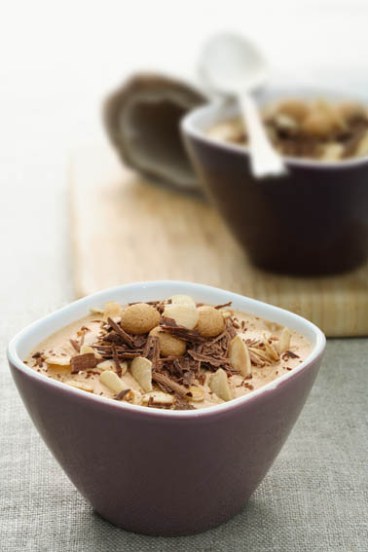
Let me know what you think of this espresso-spiked chocolate almond mousse. It’s light enough that you can enjoy it after a multiple-course meal without feeling too guilty!

Ingredients:

  • 4 eggs (I prefer pasteurized eggs)
  • ¼ lb whole milk ricotta, drained
  • 1 shot chocolate or almond liqueur (Godiva, or Disaronno)
  • 2 shots strong espresso
  • 5 tbsps crumbled amaretto cookies or other almond cookies
  • 5 tbsps sugar
  • 1 tbsp unsweetened cocoa powder
  • dark chocolate shavings and slivered almonds to decorate

Directions:

Separate the eggs. Beat the yolks with the sugar until light and frothy. Add the ricotta liqueur, coffee, cocoa and chocolate and combine well. Add the crumbled cookies.

Beat the egg whites until stiff and incorporate them into the ricotta using a spatula.

Pour the mix into individual bowls, and refrigerate for at least 2 hours. Decorate with chocolate shavings and slivered almonds before serving.

*RAW EGG WARNING and PASTEURIZING EGGS:
 some people are uncomfortable consuming raw and lightly cooked eggs due to the slight risk of food-borne illness. To reduce this risk, we recommend you use only fresh, properly refrigerated, clean grade AA eggs with intact shells. Still nervous? If using pasteurized eggs, it will be harder to beat the yolks frothy and especially to beat the whites stiff: for the yolks, you will just need to beat them longer with an electric mixer; as to the whites, you will need to add a touch of cream of tartar (or lemon juice or white vinegar); about 1/3 teaspoon cream of tartar or 3/4 teaspoon lemon for 4 whites. You will also need to use an electric mixer and beat for twice as long as you would with regular egg whites You can buy pre-pasteurized eggs in many stores (test are not the egg-beaters but actual whole eggs, that can be separated at home into whites and yolks); or you can pasteurize them following this method.

* Disclosure: I was not paid for my review of the Philips Saeco espresso machines, apart from being given one Syntia machine to try and review. All comments are my own, honest opinion after my experience with the machine.

Categories: Comfort food, dairy, Desserts, gluten-free, light and healthy, Uncategorized | Tags: , , , , , , , | 12 Comments

Thanksgiving Cornmeal Cake from the Veneto

Image

It was eight years ago, just a few months after moving to the City, that I experienced my first Manhattan Thanksgiving: ironically, I ended up celebrating the quintessential American holiday at an Italian friend’s home. Daniela had arrived in New York one year before me, and was so smitten with it that she scored higher on the Time Out Magazine test “Are You a Real NewYorker?” than all our American friends. It was her idea to throw an Italian-style Thanksgiving dinner, incorporating the various traditional foods of the holiday into Italian recipes. Given that she is a superb cook, carrying the extraordinary legacy of three different Jewish Italian culinary styles – the Piedmontese, the Venetian and the Ferrarese - it’s no surprise that the meal was an absolute masterpiece. I had the impression that for the American guests, eating these Italian delicacies instead of the classic turkey with cranberry sauce also felt a little naughty! While I can’t replicate the special atmosphere of that night, after Daniela moved to Israel I adopted her tradition of remembering the Pilgrims with the regional dishes from my own country.

I’m used to cooking around symbolic foods for Passover and Rosh haShana: turkey and pumpkin, the most recognizable Thanksgiving ingredients, also appear on my Rosh HaShana table, and again on Sukkot. The connection with Sukkot runs even deeper, as both holidays are harvest festivals: some historians have gone so far as to trace the roots of Thanksgiving in Sukkot, based on encounters the Pilgrims supposedly had with Sephardic Jews in Holland before they left for the Americas.

But whether or not this story is true, Jews celebrate Thanksgiving Day with an intensity usually reserved to our most sacred holidays: it’s easy for us to empathize with the pilgrims, who had to flee religious discrimination and persecution and travel across an ocean to find freedom – and with their sweat and faith, fought against illness and scarcity, finally turning America’s wilderness into their “Promised Land”.

While the turkey and pumpkin are symbols of bounty, one food on the table is meant to remind us of the harsh winter before the first harvest, when the pilgrims barely had enough to eat. It’s the corn, as it is said that at one point there was so little food that each person was given only five kernels of corn per day. Corn bears a similar type of double-symbolism in Italian history: when it found its way to Italy from the Americas, it immediately spread through the North, and landowners started reaping huge profits by feeding their workers only maize polenta – creamy, delicious and filling, but so poor of vitamins and protein that it caused an epidemic of Pellagra, the same deficiency disease that spread in the American South during the great Depression, leading to deterioration and death. Somehow, native Americans had avoided it because they added wood ashes and lime to cornmeal, correcting its nutritional imbalance.

Cranberries can also be read as a symbol of suffering: of course we combine them with a lot of sugar to make them palatable, but their nature is extremely sour. This reminds me of the symbolism of sweet and sour dishes in Jewish Italian Cuisine, in which the sugar or honey represent the need to appreciate our present and future, while the vinegar or lemon keeps us rooted in our people’s past suffering.

While giving thanks for the plentiful new crop, and the many blessings that we enjoy each year, we also remember those who didn’t make it through that terrible first winter. 
Have a meaningful Thanksgiving!

Ingredients

  • 1 scant cup (150 gr) cornmeal maize (for polenta) or 2 cups cooked polenta (cooked dense, not liquidy)
  • 3 tbsps grappa or brandy
  • 1/3 cup dried cranberries (or raisins)
  • 1/2 to 2/3 cup candied fruit (mix of orange and lemon or citron) (optional)
  • 1/4 cup pine nuts
  • 1 organic lemon
  • a pinch of salt
  • 1/3 cup of sugar (about 85 gr)
  • 1 scant cup flour (about 100 gr)
  • 1 1/2 tbsp baking powder (10 gr)
  • 1/4 cup oil (mild olive oil , vegetable oil or coconut oil)
  • 2 eggs

Preheat the oven to 400 F. Prepare the polenta with one scant cup of maize according to instructions on the package, using only about 1 1/4 cup boiling water (traditional polenta tastes better than instant, and you can make it quickly using a pressure cooker… however, instant is OK! Beretta makes a nice product). The polenta has to be on the thick side. 
When cooked, pour it over a large cutting board or platter in a wide and low heap and allow it to cool (feel free to pop it into the fridge).
 Plump the cranberries or raisins in the grappa or brandy. Dice the candied fruit very small. Discard the film that has formed over the polenta. Cut the polenta into pieces and place it into a food processor. Process it with the eggs, salt, sugar, oil, sifted flour with baking powder; add the raisins in their liqueur, the candied fruit, pine nuts, and the lemon zest and mix well. If the batter is so thick that it’s hard to pour into the pan, you can add just a couple of spoonsfuls of water or non-dairy milk.
Grease a 9″ springform pan and dust it with corn meal. If you have parchment, you should line the bottom of the pan before greasing it: this type of batter is very sticky. Pour the mix into it and bake in a pre-heated 400 F oven for about 15 minutes until it forms a golden crust, then lower the heat to 350 and bake for another 30-45 minutes (the cake should bake for 45-60 minutes total). Allow to cool before turning out. Serve warm, sprinkled with confectioner’s sugar.

Categories: Comfort food, Cucina Ebraica, dairy-free, Desserts | Tags: , , , , , , , , , , , | 11 Comments

Baked Pears with Sorbet and Berries

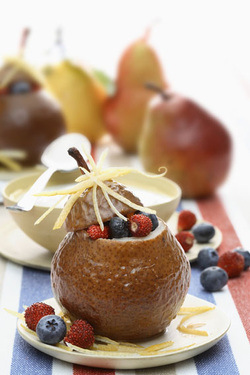
Baked Pears with Sorbet and Berries (Parve or Dairy) GF

My grandmother used to serve a lot of simple, not-too-sweet fruit desserts such as baked fruit and compotes. After the spread of commercial bakery products, many of us have forgotten about this option: it always seems easier to buy a box of cupcakes… however, when you start feeling like you’ve had way too much sugar, and you need a break, it’s time to go back to the good oldies! While you may choose them mostly because they are waistline-friendly (especially if you are switching from cupcakes), cooked fruit desserts have the added bonus of vitamins and fiber, and many find them more appealing than raw fruit on cold fall and winter nights.

Buon appetito!

  • 4 ripe pears
  • 1 cup lemon sorbet
  • 1/2 cup strawberries, or other berries
  • 1/2 cup blueberries
  • peel of one organic lemon
  • a teaspoon of unsalted butter, or nut oil for a non-dairy/parve version (almond, coconut)

Wash the pears and cut of a small slice from the bottom so they can stand straight. Without peeling them, place them in a parchment-lined pan. Sprinkle them with brown sugar, and a few flakes of butter (or brush with the almond or coconut oil).
Bake in a pre-heated 350 F oven for about 30 minutes or until soft, but still firm.
Allow to cool off for a few minutes. When they are still warm, but not hot, slice off the top and core the inside. Fill the cavity with the lemon sorbet and the berries. Put the tops back on and decorate with lemon zest.

* if you don’t feel like anything frozen, you can replace the sorbet with a mix of ricotta, greek yogurt, and honey.

Categories: Comfort food, Desserts, gluten-free, light and healthy, non-dairy, vegetarian | Tags: , , , , , , , , , , | 5 Comments

The Spiders

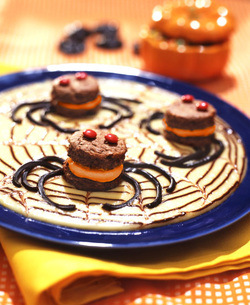
I RAGNI (The Spiders)

I grew up in Italy being told not to take candy from strangers, and still find it a bit shocking when strange kids knock at my door on Halloween night! While the more religiously conservative are offended by Halloween’s pagan roots, the holiday seems to have become completely secularized and to focus on pumpkins, spooky costumes and tons of candy. Many people love it because it seems to address children’s natural fears (monsters, darkness, etc), and by presenting them in a social and funny context, it could help diffuse them. I’m not making this up, it’s called “virtual reality therapy”: basically, people who are afraid of spiders pay big bucks to a psychologist to be put in a room full of them… well, if it’s so effective, it might be worth a try, even for those of us who would rather do it at a different time of the year. It works with grown-ups too: here are the cutest little spiders, created by my friend Lucilla to address my own proverbial fear.

Ingredients (makes 6 spiders):

  • 1 chocolate cake (home-made or store-bought)
  • red M&Ms
  • licorice sticks
  • vanilla pudding (home-made or store-bought)
  • 1/2 cup bittersweet chocolate chips
  • 2 pounds pumpkin, diced
  • 2/3 pound whole milk ricotta
  • 1 tablespoon honey
  • 2 teaspoons grated orange zest

Bake the pumpkin, covered, in a 375 F oven for about 20 minutes or until soft, then mash it with a fork. Using your food processor or hand mixer, combine the ricotta with the pumpkin, honey and zest. Halve the cake horizontally with a long and sharp knife. With a round cookie cutter, cut about 12 discs from the cake. Spread the pumpkin/ricotta mix over the bottom discs, and top with the other discs.
Spread the vanilla pudding on a large serving platter. Melt the chocolate in your microwave then use it (with an icing syringe) to draw concentric circles on top of the pudding. Draw “rays” with a toothpick starting from the center of the circles, creating a web. Place the discs filled with pumpkin/ricotta cream on top of the web, make the eyes with red M&Ms or jellybeans, and legs with licorice sticks. YIKES!

Categories: Comfort food, Desserts, Uncategorized | Tags: , , , , , , , | 1 Comment

Puff Strudel with Chocolate, Hazelnuts and Pears (Sfogliata al Gianduja e Pere)

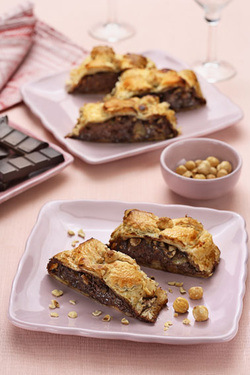
Sfogliata Gianduja e Pere (Puff Strudel with Chocolate, Hazelnuts and Pears) (Dairy or Parve)

The combination of hazelnuts and chocolate is wildly popular in Italy – I’m sure you have heard of Nutella! The original version is Gianduja - a concoction made of chocolate and hazelnuts invented in Turin during the Napoleonic blockade, when the precious cocoa beans had become scarce and the famous Piedmontese chocolatiers had to find a way to make them go further-. It didn’t hurt, of course, that their hazelnuts (from the Langhe area of Piedmont) were said to be the best in the world, and that Turin was the birthplace of solid chocolate. As you can imagine, the result was much more interesting than other hard-times-inspired products (such as the French chicory “coffee”), and even after the end of the blockade the Torinese kept enjoying their new delicacy, and named it “gianduja” after a local marionette character.

Besides enjoying the tasty combo in the form of a spread or in confections (the delicious gianduiotti - the first-ever chocolates to be individually wrapped!), make sure you try my gianduja puff cake!

Ingredients

1 pound of puff pastry (home-made, or 1 package store-bought)
3 medium pears
5 ounces dark chocolate (I used 70 % Scharffen Berger)
½ cup ground hazelnuts
6 chocolate-flavored tea biscuits, or small biscottis
2/3 cup (scant) sugar
pinch of salt
1 organic lemon
1 egg yolk
2 tablespoons butter, or hazelnut or almond oil
2 tablespoons milk (or non-dairy almond or soy milk)
flour (to dust the counter)

Directions

Peel and core the pears, slice them thinly and combine them with the lemon juice, the sugar, and the grated lemon zest. Grate the chocolate and coarsely chop the cookies. If using butter, melt it in a pan or in your microwave.
On a floured surface, roll out the pastry into a rectangle and brush the top with the melted butter or oil; top with the crumbled cookies, the drained pears, and the grated chocolate. Roll up the pastry as if making a strudel, sealing the edges and closing the ends.
Brush the top with the yolk (mixed with a couple of tablespoons of milk or parve almond or soy milk) and bake in a pre-heated 250 F oven for about 30 minutes or until golden. Enjoy warm or at room temperature, on a cold winter night .

Categories: Comfort food, Cucina Ebraica, Desserts, Jewish Italian Cuisine, non-dairy | Tags: , , , , , , , , , , , , , , | 3 Comments

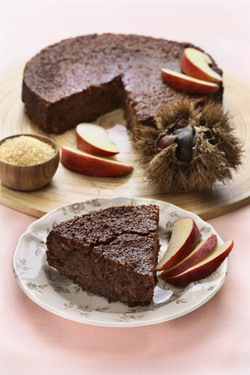
Chestnut and Apple Cake - GF

Chestnut and Apple Cake (Dairy or Parve) GF

The chestnut tree can live for up to 500 years, and its fruit has been a staple in the Italian diet since ancient times. In some Northern and central regions, people ate mostly chestnuts until well into the twentieth century! While this is no longer the case, towards the end of October stands pop up in most cities selling hot caldarroste (roasted chestnuts), which people enjoy while walking with friends when it’s too cold for gelato. However, they are just as tasty when boiled with some fresh herbs (try bay leaves), or mashed and used to make very special gnocchi! In Tuscany, where my mother grew up, chestnut flour is also widely available and used to make the traditional castagnaccio, a rustic cake with raisins, pine nuts, rosemary and olive oil. My nonna used to serve it with a little warm ricotta mixed with a few drops of honey, which was a killer pairing and so much healthier than whipped cream. Try it with my apple cake! You won’t believe it’s gluten-free…

Ingredients (serves 8)

1 lb chestnuts
4 eggs, separated
3 apples
1 and 1/3 cups granulated sugar or brown sugar
1 heaped tablespoon unsweetened cocoa powder
1 pinch salt
4 ounces graham crackers or tea cookies (you can use GF cookies if you prefer)
2/3 cup milk (or parve soy or rice milk)
butter or oil to grease the pan

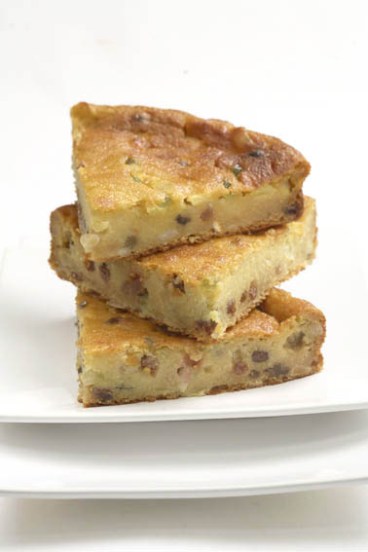
Wash the chestnuts, make a slit in the side of each one, and cook in boiling water for 30 to 40 minutes or until tender but firm. Skim them out, and the brown skin should come off easily. Taste them, and if they are not well cooked you can put them back in the boiling water or in the microwave for a few minutes until tender.
Using a food processor, grind the graham crackers into a powder; add the grated apples, and the mashed chestnuts (you can use a potato masher. you can also mash them in your food processor, but it won’t get rid of any residual peel, which is why I prefer the potato masher).
Add the cocoa, sugar, milk or soy milk, salt, and egg yolks, and combine well.
In a separate, clean bowl, beat the egg whites until they form stiff peaks, and incorporate them carefully into the mix.
Pour the mix into a greased baking pan dusted with brown sugar, and bake in a pre-heated 350 F oven for about 30 to 40 minutes. Serve cold.

Categories: Comfort food, Desserts, gluten-free, non-dairy, Uncategorized | Tags: , , , , , , , , | 9 Comments

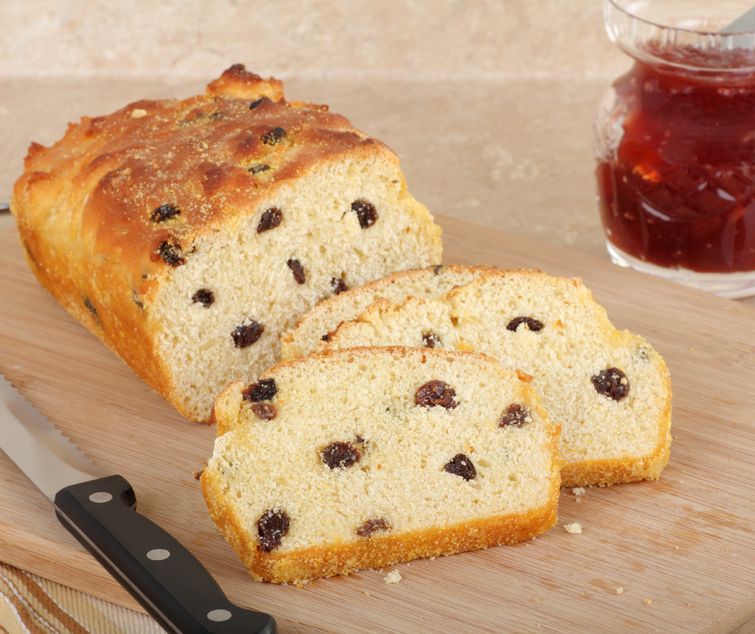
BOLLO - FRUIT CAKE TO BREAK THE YOM KIPPUR FAST

Bollo is a sweet-but-not-too-sweet bread with raisins, candied zest, and/or anise seeds (depending on which city you live in), served in many Italian and Sephardic communities to end the Yom kippur fast. Its name means simply “cake” in Spanish and Portuguese, a sign that we need to thank the Iberian exiles for yet another yummy treat!

In Venice, we are literally handed a slice as we are walking out of synagogue at the end of services, on the steps. Obviously, even a piece of cardbord would taste great accompanied by a tall glass of lemonade after 25 hours without food or water! However, this cake keeps being served over and over all through the fall holidays, upon entering the sukkah and until Shemini Atzeret. By then, we are usually stuffed, and I still love it - especially with jelly, for breakfast.

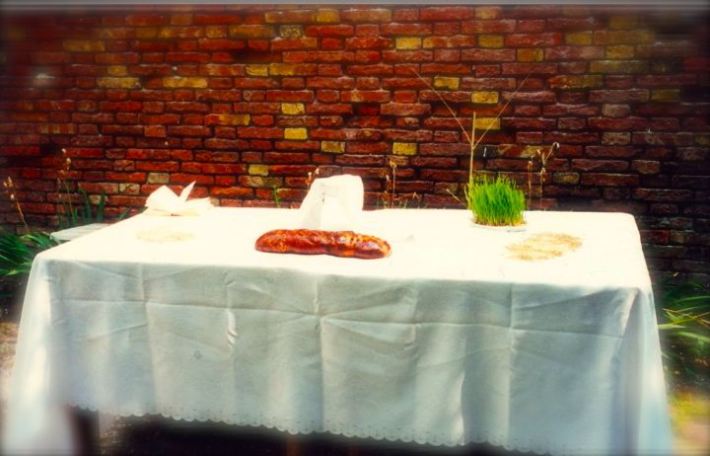
The Bollo is also one of the key elements of the “Tavola dell’Angelo” (the Angel’s table), a ritual table setting that several Venetian families prepare on the eve of Yom Kippur in their homes. The table is dressed in white, and decorated with harvest symbols such as pomegranates, flowers and corn. Jewish ritual objects, like prayer books Kiddush cups and candlesticks are also present. Finally, many families use sprouting wheat grains to write auspicious messages such as “Shana Tova”, or to draw symbols (like hands with the fingers spread out for the priestly blessing).

Image

The center of the festive table are always the bollo and a cup or pitcher of water: a tease to humans during the long fast, these treats are in fact strictly reserved to a mysterious “angel”, in case he/she decides to pay a visit: Yom Kippur is, in fact, the holiest day in the Jewish year, the “Shabbat Shabbaton”, and… you never know!

If you happen to be in Venice around the fall holidays, don’t forget to try the bolo from the local kosher bakery, Volpe . You can also pop into the Giardino dei Melograni kosher hotel (by the Hosteria del Ghetto kosher restaurant) and check out their beautiful Angel’s Table.

But back to the Bollo….

  • about 5 cups flour (a little over 1 lb of 00 or all-purpose)
  • 25 gr fresh yeast, or use dry yeast
  • 1/2 cup warm water (mix 1/2 cold water and 1/2 very hot water)
  • 1 scarce cup sugar
  • a pinch of salt
  • 3 large eggs (if they are quite large, use 3 yolks and 2 whites)
  • 1/2 cup mild olive oil or seed oil
  • 1/2 cup raisins, plumped in warm water or brandy and drained
  • grated zest of one lemon
  • 1 1/2 tbsp candied lemon or orange zest (optional) OR aniseeds (optional)
  • 1 shot brandy, cognac or grappa
  • 1 egg yolk or more to glaze the surface

In a bowl, combine the yeast with the warm water and only about 1/4 of flour and 1/4 of the sugar . Mix well, cover with foil and allow to rest in a warm place for at least 1 hour (even overnight) or until doubled in size. If your apartment is cold, you can turn the oven on and then off: once the oven is warm but not scolding hot, place the bowl with the mix inside, covered with aluminum foil.

Once the mix has more or less doubled in size, add the rest of the flour, the sugar, 3 eggs, and mix well by hand or in a stand mixer. Cover again and allow to rest again in a warm place for 2 hours or until it doubles in size again.

Add the rest of the ingredients and knead again for a few minutes, then shape it into two oval breads.

Cover again with a towel and allow to rest and rise for at least 2 more hours or until light and fluffy and doubled in size.

Brush the top with the egg yolk (slightly beaten with very little water). If your oven tends to be dry, you can also spray lightly with a fine mist of ice water (to prevent it from darkening too much), and add a small pyrex pot or pan full of water in the oven, to keep the air moist. Your oven should be preheated at 450F. Bake at this temperature only for the first 5 to 7 minutes, then lower to 360 for another 35 or 40 minutes. Baking time varies depending on your oven.

***P.S. if you are not much of a baker, there are quicker ways to break the fast Italian-style: try quince paste with any simple cookies, or - if you can tolerate alcohol - the Piedmontese “Bruscadela“: layers of toasted challah soaked for a few hours in mulled wine (simmered with cinnamon, cloves and sugar). I had this once and it made me sleep for 13 hours.

Categories: bread, Comfort food, Desserts, Jewish Italy, Sukkot, Yom Kippur | Tags: , , , , , , , , , , , , | 3 Comments

Blog at WordPress.com. Theme: Adventure Journal by Contexture International.

Follow

Get every new post delivered to your Inbox.

Join 1,896 other followers