dairy

Surprise Holiday Chest

Image

From Chanukkah to Christmas and of course birthdays, most of you will have to admit that part of the fun about giving and receiving presents lies in the packaging and wrap, which add an element of mystery and surprise to any gift. They conceal the object’s shape and any writings on the box, and increase our excitement and anticipation. For the aesthetes among us, the packaging can outshine the gift (or it can be used to hide a more metaphysical content – for more on this, you can read one of my favorite children’s books, “The Gift of Nothing”).
Image

This rule of course applies to food, which is why chocolates seem to taste so much better when they come in a gorgeous box. The Japanese take this to the next level, cutting their vegetables into beautiful shapes and serving their kids’ school meals in lacquered bento boxes. This probably sounds like too much work and most of us would not be willing to do it everyday, but when it comes to holiday desserts, I know that we are all willing to go the extra mile.

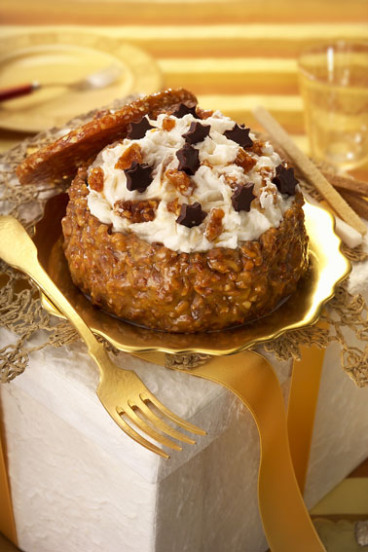
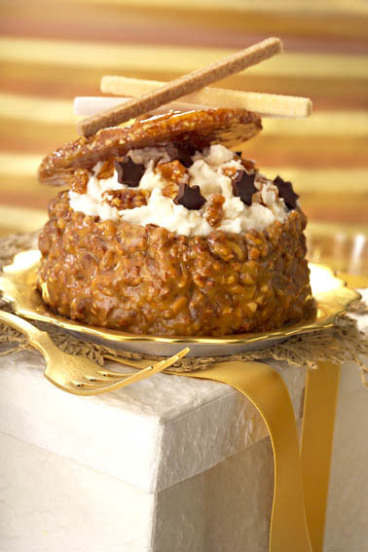
So here is a special edible gift that your family will love! The mascarpone mousse, which will remind you of Tiramisu, is hidden in a treasure chest made of “Croccante” (Italian almond brittle). This type of candy, popular throughout Italy around the holidays and at fun fairs, is a mixture of caramelized sugar and almonds, easy to make, and easy to eat: you can break it into pieces and serve it with coffee, give it to kids in lieu of candy, or grind it up and sprinkle it over gelato. The only problem is that once you taste it, it will be hard to stop.

Happy Holidays!

SURPRISE HOLIDAY CHEST (Scrigno di Croccante)

(For the chest)

  • 2 and 1/3 cups blanched almonds
  • 1 lemon
  • 1 ½ cup sugar

(for the filling)

  • 2/3 pounds Mascarpone
  • 1 cup heavy cream
  • 4 oz bittersweet chocolate, chopped or coarsely grated.
  • ½ cup sugar

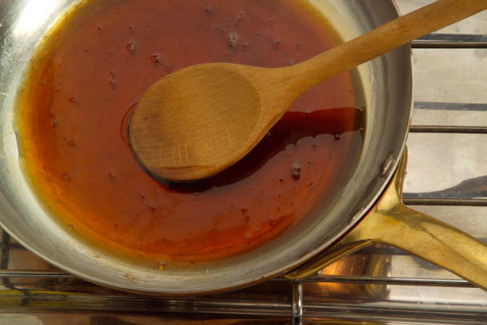
Grind the almonds very coarsely in your food processor, or chop them with a knife. In a saucepan, melt the sugar on medium heat with the filtered juice of half the lemon. Yum, caramel!
Image

Add the almonds and keep cooking until the sugar has completely melted and has turned dark golden brown. Double-Yuml!!!

Cut a circle from parchment, about 9 ½” in diameter. Place it on top of a larger sheet of paper or foil. Now pour the caramel on top of the circle and spread it all over, it should be between 1/3” and ½” thick.

Carefully lift the circle and trasfer it onto a round 8 “ baking pan, lifting the sides and pressing them against the sides of the pan with a tablespoon dipped in lemon juice, until the caramel has molded to the shape of the pan. On a smaller disc of parchment, make a second disc of caramel (slightly less than 8″ in diameter), which will become the “lid’.

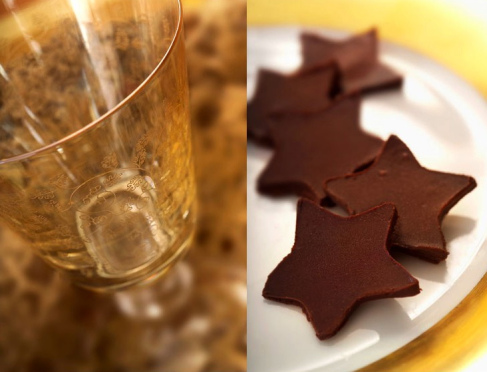
Whip the cream with an electric whisk, and combine it with the sugar, mascarpone, and amost ¾ of the chocolate. Pour into the caramel container, and top with the lid. Decorate with the rest of the chocolate, melted in a bain-marie, poured on top of parchment and cut into stars – or simply grated. Refrigerate until you are ready to serve.
ImageS

Categories: Comfort food, dairy, Desserts, Uncategorized | Tags: , , , , , , , , , , , , , | 10 Comments

Chocolaty Vienna-Style Coffee

Image

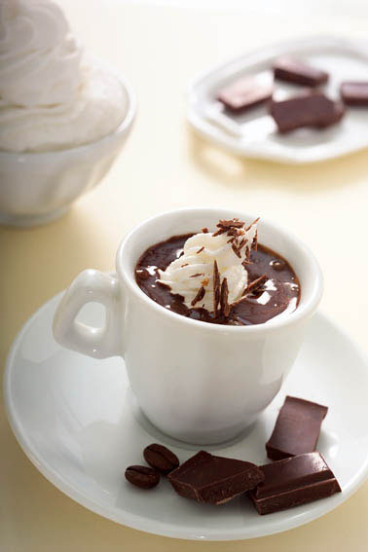
Have you ever heard of “Caffe Viennese” or “Vienna Coffee”?

I have to confess that I never really checked if it actually has anything to do with Vienna, or if it does my version may not be the most authentic: I discovered this perfect beverage during my college years, in the historic cafes of Venice and Trieste - such as the Florian and the Tommaseo - and regarded it as my grown-up upgrade from Italian hot chocolate, and my roommates and I found that it helped immensely with the cold, the fog, the all nighters before exams, and bad breakups .

While in general I find that most elaborate coffee drinks are just bad examples of “gilding the lily”, please trust me with this: it’s an improvement upon perfection!

Keep in mind that we are not talking about ordinary ingredients. Yes, chocolate tastes great, but there is more to it than what meets the lips: it’s full of chemicals that are associated with mood and emotion (phenylethylamine, theobromine, anandamide and tryptophan, since you are asking), to the point that a shocking percentage of women report to prefer chocolate to sex (sorry, guys!), and that Daniele Piomelli from the University of California compares its effects with those of marijuana.

Image

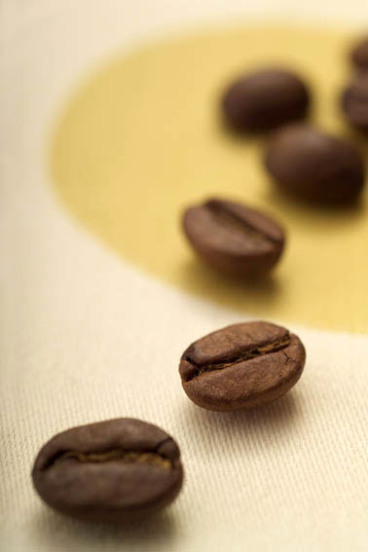
And don’t get me started about coffee. Coffee was never a simple drink, it was a social revolution! Where it spread, it opened up the night to a range of possibilities… whether pious or profane: it started with the Yemenite Sufis for their night wakes, was loved by the kabbalists, who also preferred night prayers, but it also became the beverage of choice of Casanova (a regular customer at café Florian, whose special hidden rooms upstairs offered protection to his illicit trysts). Do you really think there would have been an Industrial Revolution in Europe without its help?

On a more personal level, how many of us would have graduated from college had it not been for those midnight Americanos, and could we still call New York “the city that never sleeps” without the omnipresent to-go cups of joe?

Image

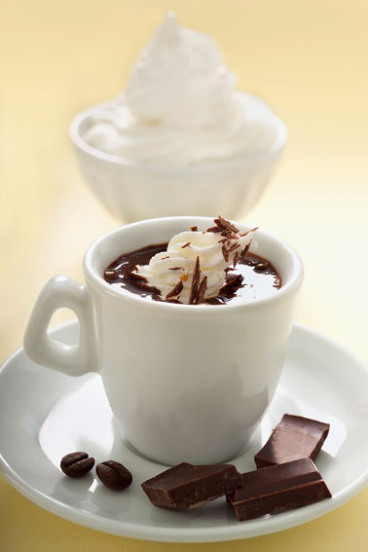
Obviously, the pairing of the two is a marriage made in heaven, as long as if you don’t suffer from gastric ulcers or tachycardia. My version is different from the popular “moka” beverages, in that I use dark chocolate in lieu of cocoa powder: I find that the mood-lifting powers of chocolate get a serious boost from its sensual, creamy texture!

Finally, do not ask me how many calories are in a cup of this concoction. I have no idea. And besides, thinking about the calories may just make you crave it more, according to Debra Zellner, a psychology professor who maintains that women crave chocolate because they have turned it into a nutritional taboo.

Just enjoy it, but do try to stop after the first two cups! Happy Holidays to All.

CAFFE’ VIENNESE

Serves 4

  • 4 small cups of espresso “ristretto” (strong and concentrated)
  • 4 ounces really good bittersweet chocolate
  • 1/3 cup heavy cream
  • 1 tbsp sugar, or to taste
  • Whipped cream to decorate, if you like (I prefer it without)
  • Ground cinnamon, if liked

Bring some water to a boil in a saucepan and place a second saucepan or heat-proof bowl on top to create a bain-marie. Add the chocolate pieces or shavings to the top saucepan or bowl, and allow them to melt, stirring occasionally with a wooden spoon. Add the heavy cream and sugar and keep stirring. Add the espresso and keep heating until some bubbles form and it thickens. Remove from the heat, and add cinnamon or chocolate liqueur if liked. You can also decorate with whipped cream and chocolate shavings. I probably don’t need to tell you this, but… serve immediately!

Image

Categories: Comfort food, dairy, Uncategorized | Tags: , , , , , , , , , , , , , , , , | 10 Comments

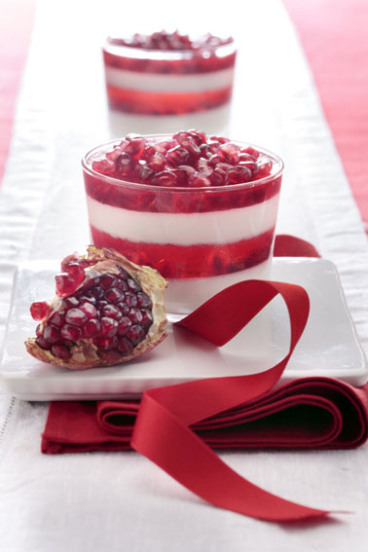
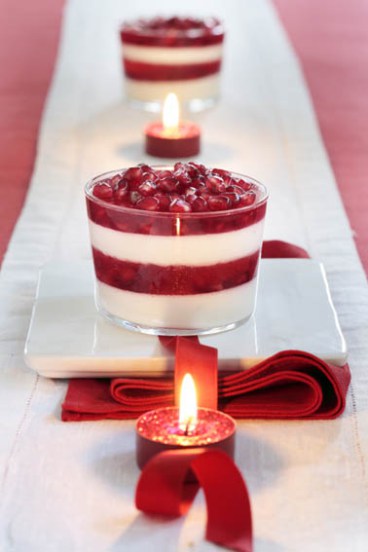
Panna Cotta alla Melagrana - Pomegranate Cream Custard

Image

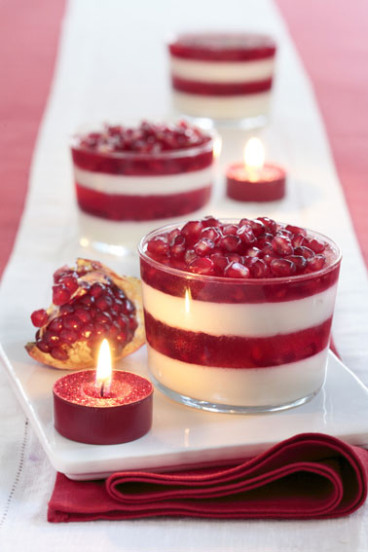
Panna cotta (cooked cream in Italian) is a traditional dessert from Northern Italy, prepared by simmering milk, sugar and cream and mixing them with gelatin. It literally takes minutes to make, but never fails to “wow” the guests. For a holiday version, I spiced it up with ponegranate seeds – a symbol of prosperity and good luck in many different traditions, not to mention a perfect contrast of color and flavor with the cream. Serve it for Hanukkah, Christmas, New Year, or a romantic anniversary dinner!

Image

  • 1 cup heavy cream
  • 2/3 cup whole milk,
  • 3/4 cup powdered sugar
  • 1 vanilla bean, cut into 2
  • 1 package powdered gelatin
  • 2 cups pomegranate juice
  • 1/3 cup pomegranate seeds

Soften about 2/3 of the gelatin in a few spoonfuls the cold milk. Heat the rest of the milk with the sugar and the cut vanilla bean. Once it’s hot, stir in the gelatin mixture and mix until smooth. Allow to cool, discard the vanilla bean, and stir in the heavy cream. Pour about 3/4″ of this mixture into 4 glass cups and transfer into the freezer for a few minutes until the mixture thickens.

Soften the remaining gelatin in about 2 or 3 tbsp of the pomegranate juice. Heat the rest of the pomegranate juice, stir in the softened gelatin, mix well and allow to cool. Once the first layer of cream mixture has thickened, pour in a layer of pomegranate mixture, mixed with a few pomegranate seeds, and put the cups back into the freezer. Repeat with one more layer of cream and one of gelatin and pomegranate seeds. Top with a few more pomegranate seeds right before serving.

Image

Categories: Comfort food, dairy, Desserts, gluten-free, Uncategorized | Tags: , , , , , , , , , , , , , | 12 Comments

Bread and Spinach Dumplings - Strangolapreti

In contrast with today’s rampant carb-phobia, bread was considered for many centuries the most sacred of foods. In the Judeo-Christian tradition, bread was always a symbol of God’s generosity toward mankind and of the fecundity of the earth- it’s still the center of countless religious rituals, not to mention superstitions and everyday idioms.

As a consequence, in many cultures there was always a stigma associated with wasting it or throwing it out, not only among the poor, but even in wealthier households; which is how bread became the main protagonist of the history of sustainable cooking.

Growing up in Italy, I learned how to store bread in paper bags so it wouldn’t become moldy. Rather, it dried out: after a couple of days it could be soaked in water, milk or broth and turn into thick soups or bread cakes, or add fluffiness to meatballs. If we waited a bit longer, we would simply grate it into crumbs. Each region has its traditional recipes, but it was during my vacations in the Italian Alps that I discovered what became my personal favorite.

In northeastern Italy, mountains and glaciers soar to almost 13,000 feet, contributing to a panorama so majestic that some say it makes you feel closer to God. My dad loved rock-climbing, and ever since I was a little girl, he would take me along for his more leisurely hikes. This was our special time together, while my mom would wait for us down in the chalet because she suffers from vertigo! That would give her plenty of time to experiment with the local cuisine, which she learned from the local women, in particular the phenomenal Nonna Plava, an old lady who used to run a small hotel with her son and daughter-in-law, and loved sharing her recipes. One of the best is the Strangolapreti, gnocchi-size stale bread and greens dumplings that are served with melted butter and cheese.

In the Italian Alps, especially in the Trentino region, you can find many different versions of dumplings made from stale bread; the most famous are canderli (similar to knoedels, and to matzah balls), and strangolapreti. This curious name, which literally means “priest-stranglers” (!) is also used to describe different types of pasta and dumplings in other regions. When I was little, I thought that the recipe must have been invented by some anti-clerical, communist grandmother!

I later learned that after the Council of Trent (1545-1563) prohibited the consumption of meat on Fridays, this became one of the traditional dishes for that day, and the legend goes that the clergy enjoyed it so much that they almost choked on it. Who could blame them? These dumplings are simply addictive, and I’ve risked the same fate more than once.

The most important thing to remember when making them (as with potato gnocchi) is to keep a light hand with the flour, and add it only a little at a time; if you add too much, rather than with priest-stranglers, you’ll end up with weapons.

Ingredients

  • 1 lb Swiss chard or fresh spinach, hard stems removed
  • 8 ounces stale bread, coarsely chopped in the food processor
  • 1 ½ cup milk
  • 2 large eggs, lightly beaten
  • 4 to 6 tbsp white flour
  • 2 pinches grated nutmeg
  • 1 tsp salt, or to taste
  • black pepper to taste
  • 4 to 6 tablespoons butter, or to taste
  • a few fresh sage leaves

Instructions

Place the bread in bowl, cover with the milk, and mix.

Bring a large pot of water to boil. Add salt and the greens, and blanch for about 3 minutes. Drain, and dip in ice water to preserve the green color. Drain and squeeze well trough a colander and chop finely.

Squeeze any excess milk out of the bread; combine with the greens, eggs, flour and nutmeg until the mixture holds; if necessary, add more breadcrumbs rather than flour, but the mixture should be very wet. On a floured surface, divide the dough into 5 pieces. Dust your hands with flour, and roll the pieces into 1/2 inch thick logs. Cut the logs into 1-inch lengths, and place the dumplings onto a floured pan or parchment..

Bring a large pot of water to boil over high heat. Add salt, and cook the dumplings in batches without overcrowding them. They are ready when they rise to the surface; remove them with a slotted spoon, and place on a sheet pan (in a single layer).

Melt the butter in a skillet over medium high heat. Add the sage leaves and cook until the butter begins to brown. Remove from heat, toss the dumplings, and serve, garnishing with the whole sage leaves. Drizzle with remaining butter and top with little black pepper and abundant grated cheese.

Categories: Appetizer, bread, Comfort food, dairy, first course, vegetarian | Tags: , , , , , , , , , , , , , , , , | 3 Comments

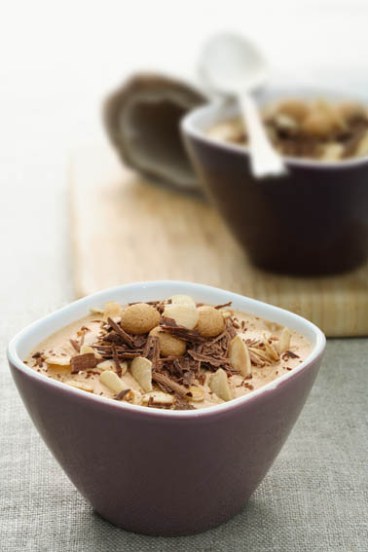
Espresso-spiked Chocolate Ricotta Mousse

Image

One of the immediate consequences of receiving a Syntia machine as a thank-you token after my lecture for Lavazza Coffee and Philips Saeco at Eataly last September, was that I started putting espresso into everything.

Literally: I experimented with stews, fish, fennel, fresh pasta, smoked cheese… with a couple of exceptions, everything seemed to taste more interesting. It’s probably because our sense of smell is responsible for about 4/5 of what we taste – that’s why we lose our appetite when we have a cold and our nose is blocked! With its intense and unique aroma, high-quality coffee is an extraordinary ingredient and can add sophistication to a variety of dishes, savory or sweet. However, I have to admit that it was its performance in desserts to really capture my culinary imagination. You see, I wasn’t really born with a sweet tooth and I can truly appreciate sugar only when I mix it with something different, whether it’s sour (lemon gelato), salty (chocolate pretzels!), or bitter (any espresso-spiked desserts!).

Tiramisu, one of the most recent and successful “classics” of Italian cuisine, is my favorite example of the perfect marriage of sweet and creamy (mascarpone, cream and sugar) with deep and bitter (espresso and unsweetened cocoa powder). A match made in heaven! Unfortunately, it’s a bit rich, and after seeing me down it for breakfast for three days in a row, my husband politely pointed out that I was showing clear signs of addiction. Switching to a ricotta-based coffee treat seemed like a better option if I wanted to indulge myself so often. Whole milk ricotta is a cheese by-product, not a cheese, and naturally low in fat and high in protein, while still very rich and creamy in texture (cannoli, anyone?).

Let me know what you think of this espresso-spiked chocolate almond mousse. It’s light enough that you can enjoy it after a multiple-course meal without feeling too guilty!

Ingredients:

  • 4 eggs (I prefer pasteurized eggs)
  • ¼ lb whole milk ricotta, drained
  • 1 shot chocolate or almond liqueur (Godiva, or Disaronno)
  • 2 shots strong espresso
  • 5 tbsps crumbled amaretto cookies or other almond cookies
  • 5 tbsps sugar
  • 1 tbsp unsweetened cocoa powder
  • dark chocolate shavings and slivered almonds to decorate

Directions:

Separate the eggs. Beat the yolks with the sugar until light and frothy. Add the ricotta liqueur, coffee, cocoa and chocolate and combine well. Add the crumbled cookies.

Beat the egg whites until stiff and incorporate them into the ricotta using a spatula.

Pour the mix into individual bowls, and refrigerate for at least 2 hours. Decorate with chocolate shavings and slivered almonds before serving.

*RAW EGG WARNING and PASTEURIZING EGGS:
 some people are uncomfortable consuming raw and lightly cooked eggs due to the slight risk of food-borne illness. To reduce this risk, we recommend you use only fresh, properly refrigerated, clean grade AA eggs with intact shells. Still nervous? If using pasteurized eggs, it will be harder to beat the yolks frothy and especially to beat the whites stiff: for the yolks, you will just need to beat them longer with an electric mixer; as to the whites, you will need to add a touch of cream of tartar (or lemon juice or white vinegar); about 1/3 teaspoon cream of tartar or 3/4 teaspoon lemon for 4 whites. You will also need to use an electric mixer and beat for twice as long as you would with regular egg whites You can buy pre-pasteurized eggs in many stores (test are not the egg-beaters but actual whole eggs, that can be separated at home into whites and yolks); or you can pasteurize them following this method.

* Disclosure: I was not paid for my review of the Philips Saeco espresso machines, apart from being given one Syntia machine to try and review. All comments are my own, honest opinion after my experience with the machine.

Categories: Comfort food, dairy, Desserts, gluten-free, light and healthy, Uncategorized | Tags: , , , , , , , | 12 Comments

Savory Beet Pie

Beets are native to the Mediterranean, but for a very long time people ate only their leaves, while the root was used in medicine to treat a variety of ailments. It was only in 19th century France that the beet’s culinary potential was discovered, while at the same time the Germans proved that it could produce sugar , making it an easy local alternative to the tropical sugar cane.

Beets are in season from June through October , but they are easy to find throughout the year because, like a lot of roots, they store well. Their flavor is deep, sweet, hearty and rich, making them ideal for cold-weather recipes like this one. Cooking the beets whole is the best way to retain most of their flavor and nutritive value. In particular, roasting intensifies the flavor and makes the peels easy to remove. Just cut off any greens, (you can cook them and eat them separately), scrub the beets clean, place them on a large piece of aluminum foil, fold and close the foil, and bake in a preheated oven at 375 F for 25 minutes to 1 hour depending on the size.

INGREDIENTS (SERVES 8)

  • One puff pastry or brisee pastry sheet, home-made or frozen
  • 1/2 pound whole milk ricotta (it’s naturally very low-fat, don’t get the fat-free type, the texture is funny) 1 large beet, baked (you can also use the pre-cooked kind but they are less flavorful)
  • 2 small leeks, cleaned and sliced very thin
  • 1 head of red radicchio, sliced thin
  • 1 small or medium egg
  • salt and pepper to taste
  • 2 tablespoons extra-virgin olive oil

Bake the beet until soft . In the meantime, heat 1 tablespoon olive oil, add the leeks and cook the leeks for about 5 minutes. Set 1/2 of the leeks aside, and add the radicchio to the pan. Cook most of the radicchio (save a little for decorating) with the remaining leeks for about 10 minutes, adding 1/4 cup of red wine if it’s sticking to the bottom. Process the cooked beet with 1/2 the cooked leeks, the ricotta, egg, cooked radicchio, salt and pepper to taste, and one tablespoon olive oil.

Pre-heat your oven to 360 F; grease a baking pan or line it with parchment; roll out the pastry, cut it in a circle about 1.5″ wider than the pan and place it in the pan. Fill the pastry with the mix of ricotta and vegetables, and add the remaining cooked leek on top. Fold the edges over, and bake for 20 to 30 minutes or until golden. Before serving decorate the top with the remaining radicchio.

*** For an even richer flavor you can add 2 tablespoons of grated parmigiano to there filling.

<!- start InLinkz script ->
<a href=”http://www.inlinkz.com/wpview.php?id=202836″><img style=”border:0px” src=”http://www.inlinkz.com/wpImg.php?id=202836″></a&gt;
<!- end InLinkz script ->

Categories: Appetizer, dairy, Uncategorized | Tags: , , , , , , , , | 5 Comments

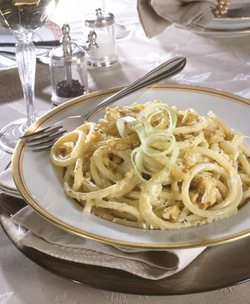
Bucatini Pasta in Cheese sauce with Hazelnuts and Thyme

Bucatini Pasta in Fontina Sauce with Hazelnuts and Thyme (Dairy)

Ingredients (serves 4)

  • 3/4 pounds bucatini* pasta
  • 8 ounces of a sharp, creamy cheese that melts well (Italian Fontina/Fontal, or Brie or Camembert)
  • 4 small leeks
  • 2 tablespoons butter or extra-virgin olive oil
  • 1/4 cup heavy cream
  • 1/4 cup milk (or less)
  • 1/2 cup coarsely ground hazelnuts
  • f1 1/2 tablespoons freshly minced thyme
  • salt and pepper to taste

*(Bucatini are very thick spaghetti with a hole in the middle. Most major Italian brands make them, but if you can’t find them you can substitute linguine)

Clean the leeks, discarding the green and harder parts, and slice them thinly. Heat the oil or butter in a skillet, add the leeks and cook until soft. In the meantime, toast the hazelnuts in the oven for a few minutes, and grind them coarsely.
Place the cheese in a heavy or non-stick skillet with the milk and cream, and allow it to melt, stirring frequently. Remove the skillet from the heat, and combine the cream/cheese mix with the cooked leeks and the ground hazelnuts.
Cook the pasta ‘al dente’ (for instructions, check my article here) and drain it, setting aside a few tablespoons of the cooking water. Toss the pasta with the cheese sauce and a little cooking water; sprinkle with pepper, decorate with thyme and serve hot.

** If you are watching your diet, you can play with the proportions of milk and cream (or just skip to one of my vegetable-based pasta sauces

Categories: Comfort food, dairy, first course, pasta, Uncategorized | Tags: , , , , , , | 1 Comment

Four Cheese Pasta (Pasta Ai Quattro Formaggi) - Italian Mac & Cheese

Macaroni and cheese occupies a special place in the American heart as the ultimate comfort food. To tell you the truth, when I moved here from Italy and found out that people were so crazy about this abomination in a box, I thought you guys were all a bit eccentric. Really – why would you want your (processed, powdered) cheese to be orange? Anyhow, I didn’t think it was a big deal. I have my own issues with junk food – namely, digging into the Nutella jar when under pressure.

Of course, when my children came back from school demanding Mac & Cheese, I went from mildly entertained to outraged (after all, I spend hours canning made-from-scratch tomato sauce!). I tried to lecture them about the superiority of fresh ingredients, the importance of vegetables, blah blah blah, but they ignored me. I needed a better strategy. Here is how I gained back my cool factor.

Meet Pasta ai Quattro Formaggi, the Italian ancestor of Mac & Cheese. While it’s probably terrible for you (I can’t imagine another dish that packs in as much butterfat), at least this homemade recipe does not include any chemicals, plus it tastes infinitely better than Kraft’s packaged version. You might still end up needing a bypass, but at least you’ll have enjoyed getting there!

INGREDIENTS (serves 6 or even 8 as it’s sinfully rich)

  • 1 package (1 lb) rigatoni or penne pasta (I like Garofalo, De Cecco and Barilla)
  • 1/2 cup heavy cream + 1/2 cup milk (if you feel too guilty, just 1 cup whole milk)  
  • 1/2 cup blue cheese (or a sharp and creamy cheese like Brie, Camembert) shredded or cut into small cubes
  • 1/2 cup taleggio (or Fontina, Asiago, Gouda), shredded or cut into small cubes
  • 1/2 cup Swiss cheese, Emmenthal or Gruyere, shredded or cubed
  • 1/3 cup Parmigiano, Grana or Parmigianito, freshly grated, plus more for topping
  • Black pepper

 (***if you keep kosher, here are some great kosher cheeses available in the US. The site specifies each cheese’s kosher certification, since we often joke that “Two Jews, three opinions” and do not always share the same standards: http://www.kcheese.com/ )

DIRECTIONS

Bring water to a boil and add salt. 

Heat the milk in a saucepan; add cream and the cheeses to the hot milk and stir continuously, until all the cheeses are melted together. If you like living dangerously, you can even add 1 tablespoon butter.

When the water boils, add some coarse salt, add the pasta and cook it until al dente, according to the directions on the box. Reserve 1/2 cup cooking water and drain the pasta.

Toss the rigatoni and the cheese sauce together, adding a little of the cooking water (it acts as an emulsifier and thickener); sprinkle with black pepper and serve accompanied by extra parmigiano. Those of you who feel fancy can go with a touch of grated nutmeg, or even shaved truffle! You can also transfer into a baking dish and broil on high until golden and crisp on top (3 to 5 minutes).
Categories: Appetizer, Comfort food, dairy, first course, pasta | Tags: , , , , , , , | 11 Comments

Blog at WordPress.com. Theme: Adventure Journal by Contexture International.

Follow

Get every new post delivered to your Inbox.

Join 1,856 other followers