Posts Tagged With: gluten-free

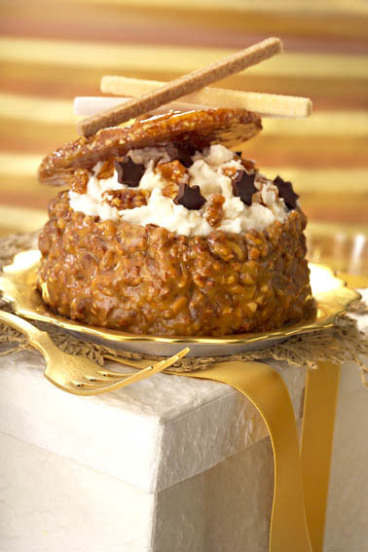
Surprise Holiday Chest

Image

From Chanukkah to Christmas and of course birthdays, most of you will have to admit that part of the fun about giving and receiving presents lies in the packaging and wrap, which add an element of mystery and surprise to any gift. They conceal the object’s shape and any writings on the box, and increase our excitement and anticipation. For the aesthetes among us, the packaging can outshine the gift (or it can be used to hide a more metaphysical content – for more on this, you can read one of my favorite children’s books, “The Gift of Nothing”).
Image

This rule of course applies to food, which is why chocolates seem to taste so much better when they come in a gorgeous box. The Japanese take this to the next level, cutting their vegetables into beautiful shapes and serving their kids’ school meals in lacquered bento boxes. This probably sounds like too much work and most of us would not be willing to do it everyday, but when it comes to holiday desserts, I know that we are all willing to go the extra mile.

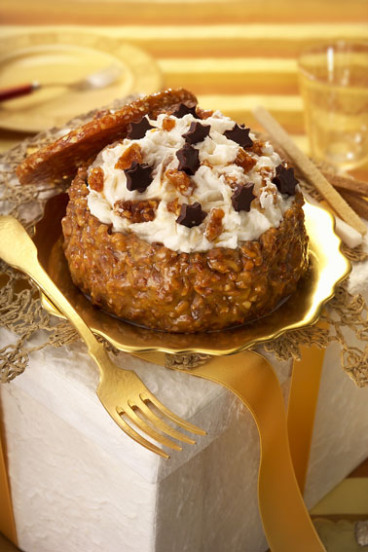
So here is a special edible gift that your family will love! The mascarpone mousse, which will remind you of Tiramisu, is hidden in a treasure chest made of “Croccante” (Italian almond brittle). This type of candy, popular throughout Italy around the holidays and at fun fairs, is a mixture of caramelized sugar and almonds, easy to make, and easy to eat: you can break it into pieces and serve it with coffee, give it to kids in lieu of candy, or grind it up and sprinkle it over gelato. The only problem is that once you taste it, it will be hard to stop.

Happy Holidays!

SURPRISE HOLIDAY CHEST (Scrigno di Croccante)

(For the chest)

  • 2 and 1/3 cups blanched almonds
  • 1 lemon
  • 1 ½ cup sugar

(for the filling)

  • 2/3 pounds Mascarpone
  • 1 cup heavy cream
  • 4 oz bittersweet chocolate, chopped or coarsely grated.
  • ½ cup sugar

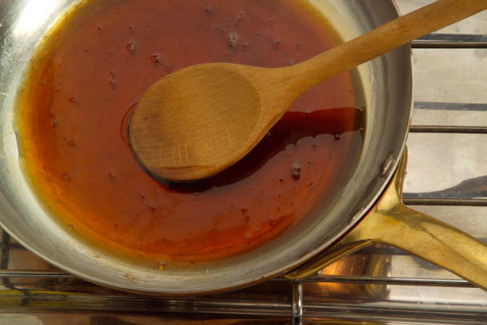
Grind the almonds very coarsely in your food processor, or chop them with a knife. In a saucepan, melt the sugar on medium heat with the filtered juice of half the lemon. Yum, caramel!
Image

Add the almonds and keep cooking until the sugar has completely melted and has turned dark golden brown. Double-Yuml!!!

Cut a circle from parchment, about 9 ½” in diameter. Place it on top of a larger sheet of paper or foil. Now pour the caramel on top of the circle and spread it all over, it should be between 1/3” and ½” thick.

Carefully lift the circle and trasfer it onto a round 8 “ baking pan, lifting the sides and pressing them against the sides of the pan with a tablespoon dipped in lemon juice, until the caramel has molded to the shape of the pan. On a smaller disc of parchment, make a second disc of caramel (slightly less than 8″ in diameter), which will become the “lid’.

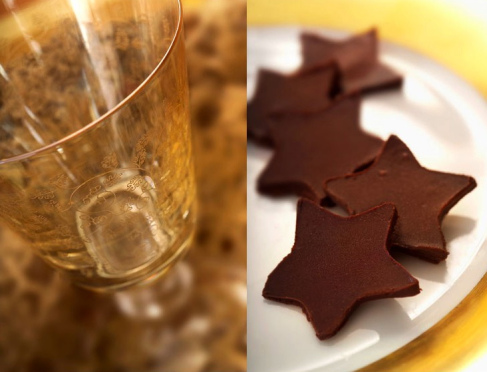
Whip the cream with an electric whisk, and combine it with the sugar, mascarpone, and amost ¾ of the chocolate. Pour into the caramel container, and top with the lid. Decorate with the rest of the chocolate, melted in a bain-marie, poured on top of parchment and cut into stars – or simply grated. Refrigerate until you are ready to serve.
ImageS

Categories: Comfort food, dairy, Desserts, Uncategorized | Tags: , , , , , , , , , , , , , | 9 Comments

Chocolaty Vienna-Style Coffee

Image

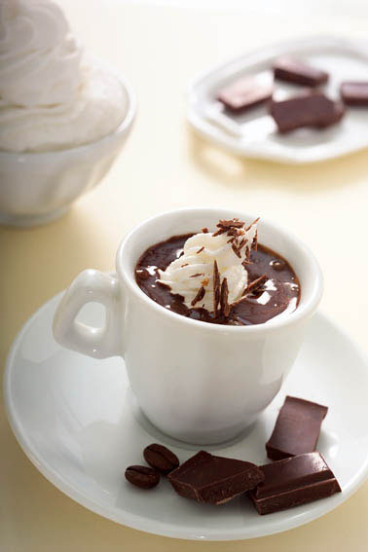
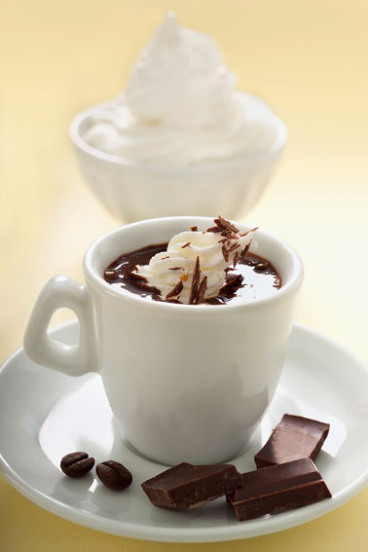
Have you ever heard of “Caffe Viennese” or “Vienna Coffee”?

I have to confess that I never really checked if it actually has anything to do with Vienna, or if it does my version may not be the most authentic: I discovered this perfect beverage during my college years, in the historic cafes of Venice and Trieste - such as the Florian and the Tommaseo - and regarded it as my grown-up upgrade from Italian hot chocolate, and my roommates and I found that it helped immensely with the cold, the fog, the all nighters before exams, and bad breakups .

While in general I find that most elaborate coffee drinks are just bad examples of “gilding the lily”, please trust me with this: it’s an improvement upon perfection!

Keep in mind that we are not talking about ordinary ingredients. Yes, chocolate tastes great, but there is more to it than what meets the lips: it’s full of chemicals that are associated with mood and emotion (phenylethylamine, theobromine, anandamide and tryptophan, since you are asking), to the point that a shocking percentage of women report to prefer chocolate to sex (sorry, guys!), and that Daniele Piomelli from the University of California compares its effects with those of marijuana.

Image

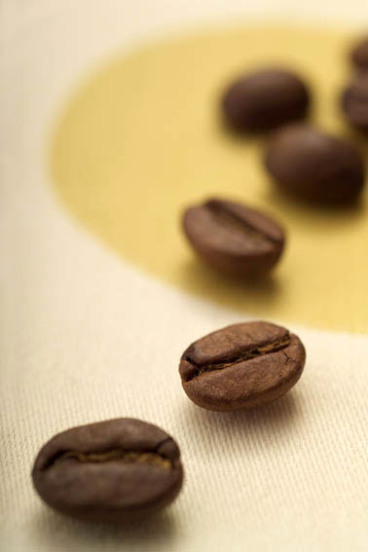
And don’t get me started about coffee. Coffee was never a simple drink, it was a social revolution! Where it spread, it opened up the night to a range of possibilities… whether pious or profane: it started with the Yemenite Sufis for their night wakes, was loved by the kabbalists, who also preferred night prayers, but it also became the beverage of choice of Casanova (a regular customer at café Florian, whose special hidden rooms upstairs offered protection to his illicit trysts). Do you really think there would have been an Industrial Revolution in Europe without its help?

On a more personal level, how many of us would have graduated from college had it not been for those midnight Americanos, and could we still call New York “the city that never sleeps” without the omnipresent to-go cups of joe?

Image

Obviously, the pairing of the two is a marriage made in heaven, as long as if you don’t suffer from gastric ulcers or tachycardia. My version is different from the popular “moka” beverages, in that I use dark chocolate in lieu of cocoa powder: I find that the mood-lifting powers of chocolate get a serious boost from its sensual, creamy texture!

Finally, do not ask me how many calories are in a cup of this concoction. I have no idea. And besides, thinking about the calories may just make you crave it more, according to Debra Zellner, a psychology professor who maintains that women crave chocolate because they have turned it into a nutritional taboo.

Just enjoy it, but do try to stop after the first two cups! Happy Holidays to All.

CAFFE’ VIENNESE

Serves 4

  • 4 small cups of espresso “ristretto” (strong and concentrated)
  • 4 ounces really good bittersweet chocolate
  • 1/3 cup heavy cream
  • 1 tbsp sugar, or to taste
  • Whipped cream to decorate, if you like (I prefer it without)
  • Ground cinnamon, if liked

Bring some water to a boil in a saucepan and place a second saucepan or heat-proof bowl on top to create a bain-marie. Add the chocolate pieces or shavings to the top saucepan or bowl, and allow them to melt, stirring occasionally with a wooden spoon. Add the heavy cream and sugar and keep stirring. Add the espresso and keep heating until some bubbles form and it thickens. Remove from the heat, and add cinnamon or chocolate liqueur if liked. You can also decorate with whipped cream and chocolate shavings. I probably don’t need to tell you this, but… serve immediately!

Image

Categories: Uncategorized, dairy, Comfort food | Tags: , , , , , , , , , , , , , , , , | 10 Comments

Carrot Cream Soup - cream-less and dairy-free

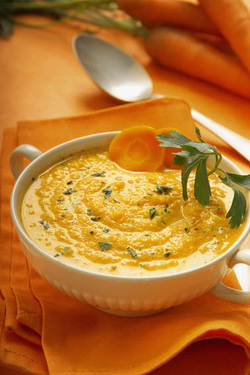
Creamy Cream-Less Carrot Soup (Parve) GF

In Italy, creamy soups - or “vellutate” - are not usually made with cream (an ingredient that we like to leave to the French): the texture is given by the addition of a simple potato or a handful of rice.

The starches in the rice are slowly released during the cooking, and act as a thickener and an emulsifier at the same time. Slowly-released starches are what gives creaminess to authentic risottos, and also the reason why we add the pasta cooking water to our sauce (the starches released by the pasta turn the cooking water into an emulsifier, and a thickener). Better than fairy dust! This method obviously helps limit saturated fats, but it’s also a great resource for the dairy-intolerant, or the kosher cooks who need dairy-free dishes to serve with meat.

If you love smooth textures, you can turn any vegetable soup into a vellutata simply by throwing in a boiled potato and some water and processing everything in the blender. An easy way to recycle your second-day minestrone!

Ingredients (serves 4 to 6):

  • 2 pounds carrots
  • 1 onion
  • 1 celery stick
  • 1 ½ quarts vegetable stock or to taste
  • 2 garlic cloves
  • 4 or more tablepoons extra-virgin olive oil
  • ½ cup Italian rice (short grain - Arborio, Carnaroli or Vialone)
  • 1 ½ tablespoons of freshly chopped parsley (or basil/parsley mix)
  • 1 bay leaf
  • salt and pepper to taste

Directions

Peel the carrots and slice them thinly.
Chop the celery, onion and garlic very finely.
Heat 2 tablespoons oil in a heavy pot and cook the mix of celery, onion and garlic ( “il soffritto“) on medium/low heat for about 5 minutes. Add the carrots and the bay leaf and cook for 5 more minutes. Add 2/3 of the hot stock and bring to a boil, then add the rice, lower the heat, cover almost completely, and allow to simmer for about an hour.
Discard the bay leaf, process with a hand mixer, add the rest of the hot stock and the herbs, and allow to simmer uncovered for 5 more minutes, stirring continuosly. Drizzle with 2 more tablespoons of olive oil, sprinkle with black pepper and serve.

Categories: Comfort food, dairy-free, light and healthy, non-dairy, Soup | Tags: , , , , , , , , , , | 5 Comments

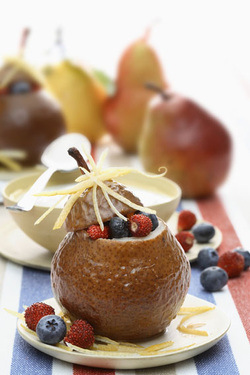
Baked Pears with Sorbet and Berries

Baked Pears with Sorbet and Berries (Parve or Dairy) GF

My grandmother used to serve a lot of simple, not-too-sweet fruit desserts such as baked fruit and compotes. After the spread of commercial bakery products, many of us have forgotten about this option: it always seems easier to buy a box of cupcakes… however, when you start feeling like you’ve had way too much sugar, and you need a break, it’s time to go back to the good oldies! While you may choose them mostly because they are waistline-friendly (especially if you are switching from cupcakes), cooked fruit desserts have the added bonus of vitamins and fiber, and many find them more appealing than raw fruit on cold fall and winter nights.

Buon appetito!

  • 4 ripe pears
  • 1 cup lemon sorbet
  • 1/2 cup strawberries, or other berries
  • 1/2 cup blueberries
  • peel of one organic lemon
  • a teaspoon of unsalted butter, or nut oil for a non-dairy/parve version (almond, coconut)

Wash the pears and cut of a small slice from the bottom so they can stand straight. Without peeling them, place them in a parchment-lined pan. Sprinkle them with brown sugar, and a few flakes of butter (or brush with the almond or coconut oil).
Bake in a pre-heated 350 F oven for about 30 minutes or until soft, but still firm.
Allow to cool off for a few minutes. When they are still warm, but not hot, slice off the top and core the inside. Fill the cavity with the lemon sorbet and the berries. Put the tops back on and decorate with lemon zest.

* if you don’t feel like anything frozen, you can replace the sorbet with a mix of ricotta, greek yogurt, and honey.

Categories: Comfort food, Desserts, gluten-free, light and healthy, non-dairy, vegetarian | Tags: , , , , , , , , , , | 5 Comments

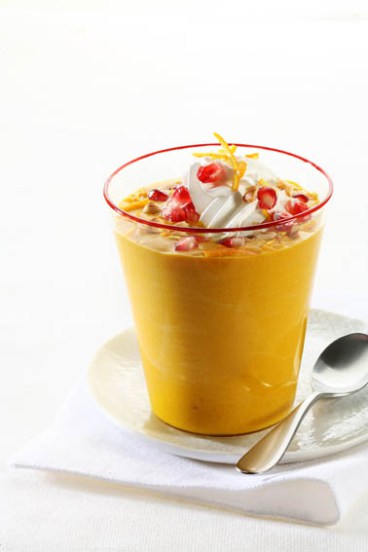
Pumpkin Soup with Pomegranate and the meaning of Sukkot

Image

Sukkot is an eight-day harvest holiday that starts four days after the fast of Yom Kippur; it is also known as the Feast of Tabernacles.
In ancient Israel Jews would build huts (Sukkah = hut) near the end of their fields during harvest season, so that they could spend more time in the fields and harvest more efficiently. For us, Sukkot is a reminder of how our ancestors lived while wandering in the desert for 40 years (Leviticus 23:42-43), moving from one place to another and using tents (sukkot) for temporary shelter. Associated with these two meanings are three main traditions:

1 – Building a sukkah.
2 – Eating inside it.
3 – Waving the lulav and etrog.

Image

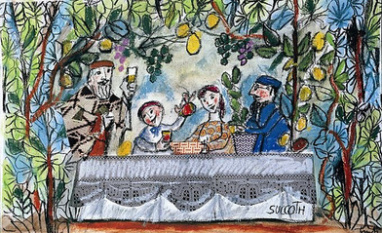
(above, Sukkot seen by Italian artist Emanuele Luzzati)

Between Yom Kippur and Sukkot , those observant Jews who have the space construct a sukkah in their backyards or decks (in cities like Manhattan or Venice with a lot of small apartments, it’s normal to just share meals in the synagogue’s sukkah). In ancient times most people would just “move” to their sukkas for the whole holiday and even sleep there: nowadays few do, especially in colder climates, but it’s still customary to eat meals in the hut, or at least snacks, reciting a special blessing.

Image

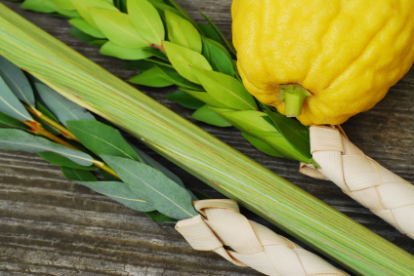
Since Sukkot celebrates the harvest, there is a custom of waving the etrog and lulav: (a kind of citron, similar to a big lemon/lime, and a bunch of myrtle,willow and palm twigs). The lulav and etrog are waved in all directions representing God’s power over the whole creation. All kids love decorating the sukkah with drawings, and mine are no exception!

As a fall harvest holiday, Sukkot celebrates the bounty of the new crops, and its food traditions revolve around seasonal vegetables and fruit. In this sense, some believe that the pilgrims may have come up with the idea of Thanksgiving inspired by the Biblical descriptions of Sukkot: after all, the Puritan Christians had landed on American shores in search of a place where they would finallly be free to worship as they pleased - a recurrent theme in Jewish history. Besides, just like the ancient Israelites, the pilgrims also had to dwell in makeshift huts (built with the help of the Indians) during their first cold winter in Massachusetts!

That’s why so many of you, unfamiliar with Jewish traditions, will immediately notice how Thanksgiving’s culinary themes mirror those of Sukkot.

All kinds of vegetables and fruit grace our tables, together with stuffed pies and pastries: stuffing one food inside another is in fact another metaphor for abundance. Many of these symbolic foods have already appeared on our Rosh haShana table, often in the form of a seder (served in a specific order and reciting blessings on each one).

Among these seasonal offerings, both the pumpkin and pomegranate stand out: in Venice we like our favorite local variety of pumpkin so much that we call it “suca baruca” (from the Hebrew “baruch”, “blessed / holy pumpkin”); as to pomegranate, it is so important in the Jewish tradition that Torah scrolls are decorated with silver ones - apparently because this fruit contains more or less 613 seeds, the number of the Mitzvot (commandments) that Jews are given to observe.

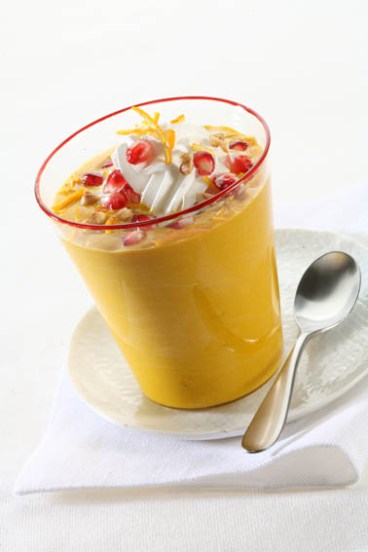
Why not combine these two symbols into a super-pretty and super-festive soup?

Image

Ingredients (serves 4)

  • 2 lbs cubed pumpkin
  • 1 medium onion, very finely chopped
  • vegetable stock
  • 1/2 orange (or 1/3 cup orange juice)
  • 1 pomegranate (or 1/4 cup pomegranate seeds plus 1/3 cup pomegranate juice)
  • 3 tablespoons mild extra-virgin olive oil
  • salt and black pepper to taste
  • 2 or 3 tablespoons coarsely ground hazelnuts (optional)

Directions

Heat the oil in a pan, add the onion and allow it to cook until soft (add little water if it starts sticking). Add the pumpkin and allow it to cook for 5 minutes, stirring. Add the orange zest and 1/3 cup of pomegranate juice (you can skip the juice if you prefer a less tangy flavor and a lighter color). Keep cooking until the juice has evaporated, then add enough hot vegetable stock to barely cover the pumpkin, salt and pepper, and cook until very tender. (at least 30 minutes).
Process with a hand mixer; adding more salt and stock as needed, and pour into individual bowls; decorate with the hazelnuts (if using), a few pomegranate seeds and salt. In the context of a dairy meal, you can decorate it with a little sour cream or Greek yogurt. Serve warm.

Categories: Uncategorized | Tags: , , , , , , , , , , , , , , , , , | 2 Comments

Blog at WordPress.com. Theme: Adventure Journal by Contexture International.

Follow

Get every new post delivered to your Inbox.

Join 1,900 other followers